

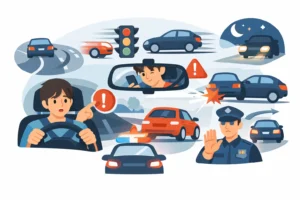
The first few months behind the wheel can feel like a lot happening at once. If you are worried about the top driving mistakes new drivers make, that is actually a good sign. It usually means you are paying attention, taking safety seriously, and trying to build strong habits before bad ones settle in.
Most beginner mistakes are not about carelessness. They come from overload. A new driver is watching traffic, checking speed, reading signs, thinking about lane position, and trying to stay calm at the same time. That is why smart practice matters. The goal is not perfection on day one. The goal is steady progress and safer decisions every time you drive.
Why the top driving mistakes new drivers make are so common
New drivers often know the basic rules, but real traffic asks for timing, judgment, and anticipation. Those skills take repetition. A student may understand that they should check mirrors before changing lanes, but in a busy street, they may forget one step because they are also watching lights, pedestrians, and the car ahead.
Confidence plays a role too. Some beginners are too nervous and hesitate when they need to act. Others feel comfortable too quickly and start skipping checks or following too closely. Both patterns can lead to the same result – avoidable mistakes.
The good news is that most of these issues can be corrected with focused practice, clear feedback, and a calm approach.
1. Looking too close to the front of the car
One of the most common beginner errors is staring just over the hood. When you do that, everything feels rushed. Turns become jerky, lane position drifts, and braking gets late because you are reacting too close to the problem.
Safer driving starts with looking well ahead. That gives you more time to notice a slowing vehicle, a changing light, or a pedestrian near the curb. You do not stop checking what is nearby, but your main visual focus should be farther down the road.
This habit is especially important in city driving, where signs, parked cars, bikes, and crosswalks demand constant scanning.
2. Forgetting mirror and blind spot checks
Many new drivers check mirrors sometimes, but not consistently. Others look in the mirror and assume that is enough. It is not. Mirrors help, but they do not show everything.
Before changing lanes, pulling away from the curb, or turning where cyclists may be present, you need a full routine: mirror, signal, blind spot, then move if the space is clear. The order matters. If you signal too late, other drivers get less warning. If you skip the blind spot, you can miss a car, bike, or motorcycle beside you.
This is one of those habits that should become automatic early, because it affects almost every drive.
3. Following too closely
Tailgating is not always aggressive. With new drivers, it is often accidental. They focus on staying with traffic and do not realize how little space they are leaving.
Following distance is your safety cushion. If the car ahead brakes suddenly, that extra space gives you time to react smoothly instead of slamming the brakes. In rain, snow, darkness, or heavy traffic, you need even more room.
A simple rule helps: pick a fixed point ahead and make sure at least a few seconds pass between the car in front reaching it and your car reaching it. If conditions are poor, increase that gap.
4. Braking too hard or too late
New drivers often wait longer than they should, then brake sharply. Sometimes this comes from distraction. Sometimes it comes from uncertainty about speed and distance.
Smooth braking begins with early observation. If a red light is ahead, start preparing before you are close to the intersection. If traffic is slowing, ease off the gas and cover the brake. This makes the car easier to control and the ride more comfortable for everyone inside.
There is a balance here. Braking too early and too softly can also confuse the drivers behind you. The goal is controlled, predictable slowing.
5. Turning too fast or too wide
Turns can expose several beginner habits at once. A driver may approach too quickly, steer late, or drift wide because they are not looking where they want the car to go.
Good turns are built before the steering wheel moves. Slow down first, choose the correct lane position, check for pedestrians and other traffic, then turn with steady control. During left turns, many beginners cut too tightly or rush gaps they are not ready for. During right turns, some swing too wide or forget to watch for people crossing.
If a turn feels rushed, the setup was probably the problem, not just the steering.
6. Misjudging speed
Driving at the wrong speed is not just about speeding. New drivers also tend to drive too slowly in situations that require a steady, confident pace. Both can create risk.
If you drive much faster than conditions allow, you reduce reaction time. If you drive far below the normal flow without a reason, you may cause confusion around you. The right speed depends on the posted limit, road conditions, visibility, and traffic.
School zones, residential streets, and wet roads all require extra judgment. A speed that feels comfortable is not always the speed that is safe.
7. Hesitating at the wrong moment
Caution is good. Freezing is not. Many beginners hesitate too long at four-way stops, left turns, merges, or lane changes because they are afraid of making the wrong move.
The problem is that hesitation can become unpredictable for others. If you have the right of way, but you delay too much, another driver may assume you are not going. If you start to merge, then stop the move halfway, you create uncertainty.
This is where practice makes a real difference. Decision-making improves when you understand the rule, scan properly, and commit once the path is clearly safe. Being careful should still look decisive.
8. Missing signs, markings, and road rules
One of the top driving mistakes new drivers make is focusing so much on the car that they miss what the road is telling them. Lane arrows, stop lines, speed limit changes, school zones, and parking restrictions can all be overlooked when a driver is mentally overloaded.
This happens often in unfamiliar areas. A driver may be so busy finding the next street that they miss a sign or get into the wrong lane too late.
The fix is not just better memory. It is better scanning. Keep your eyes moving. Read the road early. When you know a turn or merge is coming, look for lane guidance sooner instead of waiting until the last second.
9. Driving with too much pressure from passengers or traffic
Teen drivers often feel pressure from friends in the car. Adult beginners may feel pressure from drivers behind them, especially in busy areas. Neither pressure should decide what you do.
If the car behind you wants to go faster, that does not mean you should rush a turn or skip a full stop. If passengers are talking loudly or giving conflicting advice, your attention drops.
A new driver needs space to think. That may mean practicing with one calm supervisor instead of a full car, choosing quieter routes at first, or pulling over safely if stress gets too high. Confidence grows faster in the right learning environment.
10. Treating the road test as the only goal
Passing a road test matters, but safe driving after the test matters more. Some beginners focus only on memorizing exam routes or rehearsing a few test maneuvers. That can help in the short term, but it is not enough by itself.
Real driving includes bad weather, unexpected detours, impatient drivers, nighttime visibility, and busy parking lots. A strong learner builds habits that work beyond one exam day. That means practicing observation, space management, speed control, and calm decision-making in different conditions.
If you are preparing for your license, structured lessons can help you connect the rules to real situations. That is where a school like Ecole Unity can make the process feel more manageable, especially for beginners and newcomers who want clear guidance and steady progress.
How to correct new driver mistakes without losing confidence
The best way to improve is to focus on one pattern at a time. If every drive becomes a list of ten things you did wrong, frustration builds fast. Instead, pick one skill for the week. Maybe it is smoother braking. Maybe it is checking blind spots every single time. Small wins matter because they become habits.
It also helps to practice in stages. Quiet residential streets are good for steering, scanning, and basic turns. Busier roads are better once those basics feel more natural. Night driving, highway driving, and winter driving should come later, with preparation.
Most of all, do not mistake nerves for inability. Nearly every experienced driver remembers feeling overwhelmed at the start. The difference over time is not talent. It is repetition, coaching, and the willingness to correct mistakes before they become routines.
Driving well is less about being fearless and more about being aware. If you stay teachable, practice with purpose, and give yourself time, the road starts to feel less intimidating and much more familiar.