

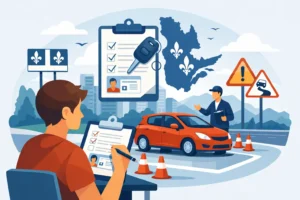
A learner permit test can feel intimidating because it is often your first official step toward driving independently. The good news is that learning how to pass a learner permit test is not about memorizing random answers. It is about understanding the rules that keep you, your passengers, cyclists, and pedestrians safe on Quebec roads.
For new drivers in Montreal, especially teens, adults starting later, and newcomers adjusting to Quebec traffic rules, a clear plan makes a major difference. Study the right material, practice applying rules to real situations, and arrive at the SAAQ prepared to think calmly rather than rush.
Know What the Learner Permit Test Is Testing
The Quebec learner permit knowledge test is designed to check whether you can make safe decisions before you begin driving on public roads. It is not simply a road sign quiz. You need to recognize signs and signals, understand traffic laws, identify risky situations, and know what a responsible driver should do.
Many students lose points because they study signs separately from driving behavior. In real traffic, the two work together. A yield sign matters because you must decide who has priority. A school-zone sign matters because your speed, attention, and stopping distance must change. A question about alcohol, fatigue, or distracted driving is testing judgment as much as recall.
Your official learning material should always be your starting point. Quebec licensing rules, fees, eligibility requirements, and test procedures can change, so confirm current details with the SAAQ before booking. A certified driving course also gives you structure, helping you learn the rules in the order that makes sense for a beginner.
Build a Study Plan You Can Actually Follow
Cramming the night before may help you remember a few signs, but it is a poor strategy for a test built around safe choices. Give yourself time to absorb the material in short, regular sessions. Even 30 to 45 focused minutes several days a week can be more effective than one long, stressful study session.
Start by reading one topic at a time. For example, spend one session on signs and road markings, then move to intersections, right-of-way rules, sharing the road, speed limits, and safe driving behavior. After each topic, close the book and explain the rule out loud in your own words. If you cannot explain why a rule exists, revisit it.
Keep a small list of mistakes and confusing rules. This could include four-way stops, turning at red lights where permitted, pedestrian priority, school bus signals, roundabouts, railway crossings, or emergency vehicle rules. Your mistake list is more valuable than rereading pages you already know well.
Use Practice Questions the Right Way
Practice tests are useful because they reveal whether you can apply information under test-like conditions. They are less useful when you memorize the answer pattern without understanding the reason behind it.
After every wrong answer, pause and ask three questions: What rule did I miss? What clue in the question mattered? What would be the safest action on an actual road? This approach turns an incorrect answer into a lesson that stays with you.
Do not be discouraged by early low scores. A practice test is supposed to show gaps before the official exam does. Aim for consistently strong results across several practice sessions, not one lucky score. If you keep missing the same category, such as right-of-way or penalties, spend a full study session on that topic before trying another mixed quiz.
Learn the Rules Behind Commonly Missed Questions
Some questions appear simple until you picture yourself at the intersection. These are the areas where careful understanding matters most.
Right-of-Way Is About Safety, Not Speed
A common mistake is assuming that the first vehicle to arrive always goes first. The situation can depend on signs, traffic signals, lane position, pedestrians, cyclists, and the movements of other vehicles. When a rule feels unclear, remember the safest principle: do not force another road user to brake, swerve, or guess what you will do.
At stop signs and uncontrolled intersections, scan fully before moving. When turning left, watch for oncoming traffic and vulnerable road users crossing your path. At crosswalks, expect pedestrians, even when they are difficult to see. The test often rewards the choice that protects the most vulnerable person.
Signs Are Messages, Not Decorations
Instead of trying to memorize every sign as a picture, learn the pattern. Shape, color, symbol, and placement all communicate meaning. Regulatory signs tell you what you must or must not do. Warning signs alert you to changing road conditions or hazards. Information signs guide you through routes, services, and directions.
When reviewing signs, imagine the action you would take after seeing each one. Would you slow down, stop, yield, change lanes, look for pedestrians, or prepare for a curve? Connecting the sign to an action makes it easier to remember during the test and later behind the wheel.
Safe Driving Questions Need a Conservative Mindset
Questions about speed, following distance, visibility, cell phone use, impairment, and weather are usually not trying to trick you. They are asking whether you will choose caution over convenience.
If conditions are poor, reduce speed and increase following distance. If you are tired, distracted, impaired, or emotionally upset, do not drive. If you are unsure whether it is safe to proceed, wait and reassess. On a knowledge test, the safest legal choice is usually the strongest answer.
Prepare for Test Day Without Adding Stress
The best test-day strategy begins the day before. Put your required identification and any documents you need in one place. Confirm your appointment details, give yourself extra travel time, and get enough rest. Arriving late or flustered can make familiar questions feel harder than they are.
During the exam, read every question slowly. Watch for words such as “always,” “never,” “first,” “best,” and “safest.” Do not answer based on what you have seen other drivers do. Answer based on Quebec rules and responsible driving practices.
If a question makes you nervous, take a breath and remove obviously unsafe choices first. Then picture the situation as if you were sitting in the driver’s seat. What would give you time, space, visibility, and control? That mental reset can help when two answers seem similar.
Avoid changing answers repeatedly unless you notice a clear reason your first choice was wrong. Second-guessing often comes from anxiety, not better knowledge. Trust the preparation you have done.
Get Support When Self-Study Is Not Enough
Self-study works well for some learners, but it is not the only path. If rules feel confusing, English or French is not your first language, or you have been away from school for a long time, personalized instruction can make the process much easier.
A professional instructor can explain rules in plain language, correct misunderstandings before they become habits, and connect theory to real driving situations. This is particularly helpful for newcomers who may have driven elsewhere but need to understand Quebec signs, road culture, winter conditions, and SAAQ expectations.
At Ecole Unity, theory preparation is designed to help learners build knowledge and confidence before moving into practical training. A structured course can also keep you accountable when work, school, or family responsibilities make studying alone difficult. The goal is not only to pass one exam. It is to begin driving with sound judgment.
After You Pass, Keep Learning With Purpose
Passing the learner permit test is a milestone, but it is the beginning of your driving education, not the finish line. The rules you studied become much more meaningful once you are managing mirrors, speed, steering, pedestrians, and traffic at the same time.
Bring the same patient mindset into your lessons. Ask questions when a situation is unclear. Practice scanning intersections, noticing signs early, and making smooth, safe decisions. A learner who understands the reason behind a rule is more likely to remember it when conditions are busy or stressful.
Give yourself credit for each step forward. Careful preparation now helps you walk into the test center calmer, pass your learner permit test with greater confidence, and start building the safe habits that will support you long after test day.