

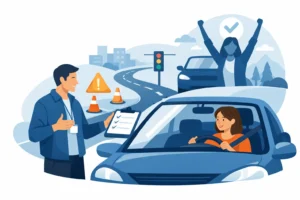
A road test is rarely difficult because a learner has never heard of a stop sign or parallel parking. It becomes stressful when decisions must happen quickly: checking mirrors, judging space, yielding correctly, adjusting to traffic, and staying calm when an examiner is watching. Skilled driving instructors help turn those separate skills into safe habits that feel natural behind the wheel.
For new drivers in Montreal, the goal is bigger than passing one test. You need to understand how Quebec roads work, follow SAAQ expectations, and feel capable when you drive alone for the first time. The right instruction creates that foundation one lesson, one situation, and one confidence-building step at a time.
What Driving Instructors Actually Teach
A professional instructor does more than tell you when to turn the wheel. They observe how you process the road, identify gaps in your technique, and give you a clear way to improve without becoming overwhelmed.
At the beginning, lessons often focus on vehicle control: seating position, mirror adjustment, steering, braking, acceleration, parking, and safe observation. These basics may sound simple, but they matter because every later decision depends on them. A driver who brakes too abruptly, looks down at the controls, or holds the wheel incorrectly has less attention available for traffic conditions.
As you progress, instruction becomes more complex. You learn to scan intersections, recognize pedestrian risks, manage right-of-way rules, enter and leave traffic smoothly, and keep a safe following distance. In busy Montreal areas, that can also mean dealing with cyclists, buses, construction zones, one-way streets, winter conditions, and drivers who do not always behave predictably.
Good instruction connects the rule to the reason behind it. Rather than memorizing that you must make a full stop, you learn how a complete stop gives you time to assess cross traffic, pedestrians, and changing conditions. Rather than simply being told to check blind spots, you practice when and how to make that check meaningful.
Why Personalized Lessons Make a Difference
No two learners begin at the same point. A teenager who has never driven may need time to become comfortable with pedals and steering. An adult learner may understand the basics but feel anxious in traffic. A newcomer to Quebec may have driving experience from another country but need support adapting to local signs, road rules, and SAAQ testing standards.
This is why a one-size-fits-all approach can slow progress. An effective instructor adjusts the pace while keeping the learner accountable. If lane changes are your weak point, you need repeated practice in lane changes, not another hour on quiet streets. If parallel parking causes stress, the instructor should break the task into manageable observations and movements, then let you repeat it until the process becomes more predictable.
Personalized training also means feedback should be specific. “Be more careful” is not enough. Helpful feedback sounds more like: “You checked the rear-view mirror, but look over your shoulder before moving into the next lane,” or “Start braking earlier so the stop is controlled.” Clear corrections give learners something they can apply on the very next attempt.
Confidence grows from evidence. Each successful merge, controlled stop, and correctly handled intersection shows you that you can respond safely. The instructor’s role is not to make every drive feel easy. It is to help you build skills gradually enough that challenges become manageable.
Learning the Quebec Licensing Path
For Quebec learners, driving education is tied to a structured licensing process. The full course includes theory and practical training, and each stage prepares you for greater responsibility on the road. Understanding that sequence can reduce confusion, especially for first-time drivers and newcomers unfamiliar with the SAAQ system.
Theory lessons prepare you to recognize rules, signs, risks, and legal responsibilities before you are expected to apply them in traffic. Practical lessons then turn that knowledge into behavior. The two work best together. Knowing the rule for an uncontrolled intersection is useful, but practicing how to approach, scan, and proceed through one safely is what makes it usable under pressure.
A certified school can also help learners stay organized around the required phases, tests, and practice expectations. This matters because rushing toward the road test without enough practice often creates more anxiety, not less. A learner may technically qualify to take the test but still need additional time with parking, highway driving, or more complicated city routes.
Preparing for the SAAQ Road Test Without Guesswork
The road test is designed to assess safe, consistent driving. Examiners are looking at your observation, judgment, control of the vehicle, respect for traffic rules, and ability to respond to real road conditions. They are not expecting perfection, but they do need to see safe decision-making.
A strong test-preparation lesson should feel realistic. You may practice common maneuvers such as parking, turns, lane changes, stopping and starting on hills, and entering traffic. More importantly, you should practice the habits that support every maneuver: mirror checks, blind-spot checks, speed management, signaling early, and looking far enough ahead.
It helps to know where learners commonly lose control of the situation. Some focus so intensely on parking that they forget to scan for pedestrians. Others rush through an intersection after a stop, hesitate too long when it is safe to proceed, or fail to keep a consistent speed. These are not character flaws. They are practice gaps, and targeted lessons can address them.
Test-day preparation also includes practical details. Make sure you understand the documents and vehicle requirements, arrive with time to settle in, and use a vehicle you can operate comfortably. If you do not have access to a suitable car, a road-test vehicle rental can remove one major source of stress. It also gives you the advantage of taking the test in a familiar, properly equipped vehicle.
Practice Between Lessons Matters
Instructor-led lessons are valuable, but safe supervised practice between lessons is where many learners gain consistency. The key is to practice with a purpose. Repeating only the routes you already know may feel reassuring, but it will not fully prepare you for unfamiliar intersections, heavier traffic, or different parking situations.
Try to vary the conditions gradually. Start with quieter residential streets, then add busier roads, more complex intersections, parking lots, evening driving, and poor-weather conditions when appropriate. Do not add every challenge at once. A learner who is still mastering basic steering should not be pushed into dense traffic during a snowstorm.
After each practice drive, identify one or two areas to work on next time. Perhaps you need smoother braking or more consistent shoulder checks. Small, focused goals are more useful than deciding that the entire drive was good or bad.
How to Choose a Driving Instructor
The relationship with an instructor affects your learning. You should feel comfortable asking questions, making mistakes, and requesting clarification. At the same time, supportive instruction should not mean vague instruction. Safety standards and test expectations need to be explained clearly.
Look for an instructor and school that offer certified training, organized course options, and a teaching approach suited to beginners. For learners in Quebec, it is especially helpful to choose a school that understands the SAAQ pathway and can explain what happens at each stage.
Affordability matters too, but the lowest price is not always the best value if lessons are rushed, poorly structured, or difficult to schedule. Consider whether the school offers flexible payment options, phased training, theory support, individual lessons, and road-test preparation. The right package depends on your experience level and where you need help.
At Ecole Unity, students can follow a structured, SAAQ-certified path while receiving practical support for theory preparation, behind-the-wheel training, and road-test readiness. That combination is especially useful when you want clear next steps rather than conflicting advice from friends or family.
The Goal Is Safe Independence
Passing the road test is an exciting milestone, but it is the beginning of independent driving, not the finish line. The habits you develop during training will shape how you respond when a child steps near a crosswalk, traffic stops suddenly, or winter weather reduces visibility.
Give yourself permission to learn at a realistic pace. Ask questions, practice deliberately, and treat each lesson as preparation for the many ordinary drives that will come after the exam. A calm, capable driver is built through repetition, guidance, and a commitment to making the next decision safer than the last.