

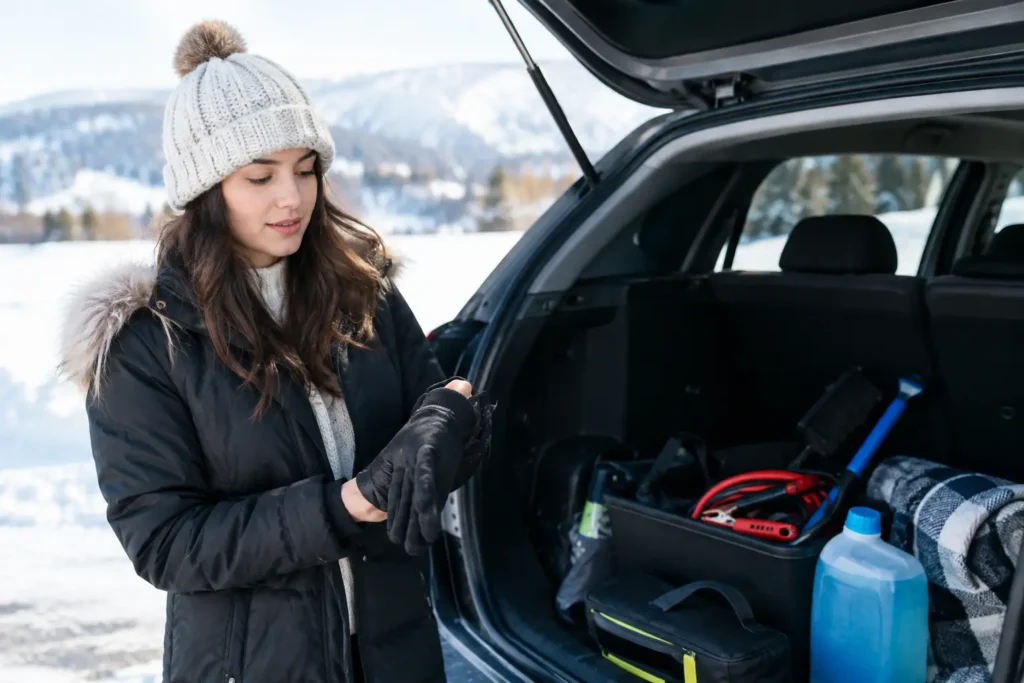
The first time your car slides slightly at a snowy Montreal intersection, confidence can disappear fast. Good winter driving preparation replaces that uncertainty with calm, repeatable decisions: slow down early, look where you want to go, and give yourself more space than you think you need. For new drivers, winter is not a reason to stop learning. It is a chance to build habits that make every season safer.
Winter Driving Preparation Starts Before You Move
A safe winter drive begins in the parking spot, not after the wheels are turning. Clear all snow and ice from your windshield, side windows, mirrors, headlights, taillights, roof, and hood. Clearing only a small viewing area is not enough. Snow left on the roof can slide onto your windshield when you brake, and covered lights make it harder for other drivers to see you.
Give yourself extra time before every lesson, commute, or appointment. Rushing is one of the biggest winter risks because it encourages quick acceleration, late braking, and poor decisions at intersections. If the weather is severe, consider whether the trip can wait. Choosing not to drive is sometimes the safest and most responsible decision.
Your vehicle also needs attention. Check that your tires have adequate tread and proper pressure, since cold temperatures can lower tire pressure. Make sure your windshield washer fluid is rated for freezing conditions, your wipers clear the glass effectively, and your battery starts reliably. In Quebec, seasonal tire requirements apply during the winter period, but legal compliance is only the starting point. Even good winter tires cannot overcome excessive speed or following too closely.
Keep a basic emergency kit in the car. A snow brush and ice scraper are essential, along with warm gloves, a hat, a blanket, a flashlight, booster cables, nonperishable snacks, water, and a phone charger. If you become stuck or delayed, these simple items can make a difficult situation much safer.
Adjust Your Driving to the Road, Not the Speed Limit
The posted speed limit is the maximum allowed in ideal conditions. It is not a target when snow is falling, slush is building, or black ice may be present. A road that looks merely wet can be frozen, especially on bridges, highway ramps, shaded streets, and intersections.
Reduce your speed before you need to turn or stop. Gentle inputs are the foundation of winter control. Accelerate gradually, steer smoothly, and brake progressively. Sudden movements can cause tires to lose traction, even at low speeds.
Following distance matters even more in winter. On dry pavement, drivers may use a few seconds of space as a reference. On snow or ice, increase that gap substantially. You need more room to notice a problem, react calmly, and brake without forcing the vehicle into a skid. The driver behind you may also need extra distance, so avoid stopping abruptly whenever possible.
At intersections, expect that other vehicles may struggle to stop. When your light turns green, take a brief moment to check that cross traffic is actually coming to a stop. This small pause is especially useful after fresh snowfall, when lane markings and pavement conditions are harder to judge.
Braking Without Panic
Most modern vehicles have anti-lock brakes, often called ABS. If you need to brake firmly in an emergency, press the brake pedal firmly and continue steering toward a safe path. You may feel vibration or pulsing in the pedal. That is normal – it means the system is helping prevent the wheels from locking.
Still, ABS does not make ice disappear. It can help you maintain steering control, but it cannot create traction where there is none. The best way to avoid a winter emergency is to spot it early and slow down before hard braking becomes necessary.
Learn How to Respond When Traction Changes
A skid is unsettling, but panic usually makes it worse. If the rear of the vehicle begins to slide, ease off the accelerator, avoid slamming on the brakes, and look in the direction you want the vehicle to travel. Then steer gently in that direction. Keep your movements small. Overcorrecting can cause the vehicle to slide the other way.
If your front tires lose grip in a turn, the vehicle may continue straight even though you are steering. Ease off the accelerator and reduce steering input slightly so the tires can regain traction. Once the front tires respond again, steer smoothly toward your intended path.
These techniques are easier to understand with a professional instructor beside you. A qualified instructor can help you practice smooth braking, turning, lane positioning, and hazard recognition in appropriate conditions. At Ecole Unity, winter lessons can help learners connect the driving rules they study with the real conditions they will face on Quebec roads.
Do not practice skids on public streets or empty parking lots without permission and proper supervision. What may seem like harmless practice can quickly become dangerous when pedestrians, curbs, hidden ice, or other vehicles are nearby.
Visibility Is a Driving Skill, Not Just a Vehicle Feature
Winter driving demands more active observation. Snowbanks can block your view when leaving a driveway or approaching an intersection. Parked cars may be partly covered in snow, pedestrians may wear dark clothing, and cyclists can be harder to spot near slushy curb lanes.
Look farther ahead than usual and scan continuously. Check mirrors often, especially before slowing down, changing lanes, or approaching a bus stop. Keep your headlights on whenever visibility is reduced, even during the day. Being seen is just as important as seeing clearly.
Fogged windows are another common problem for new drivers. Use your defroster before moving, and keep the inside of the windshield clear. Do not drive while repeatedly wiping a small clear patch with your hand. If visibility drops during a trip, pull over safely and fix the problem before continuing.
Snowbanks Change Intersections
In Montreal neighborhoods, snowbanks can make a familiar street feel completely different. They narrow lanes, hide curbs, reduce sightlines, and make right turns more difficult. Leave more room when passing parked vehicles, but do not drift into an oncoming lane without checking carefully.
When visibility is blocked, move forward slowly until you can see, while staying ready to stop. Never force your way into traffic because another driver waved you through. You are responsible for making sure the path is clear.
Prepare for Winter Lessons and the SAAQ Road Test
If you are working toward your Quebec license, winter conditions can feel like added pressure. They do not change the core skills expected on a road test: observation, safe speed choice, lane control, smooth braking, complete stops, proper turns, and sound judgment. They do make those skills more visible.
For example, an examiner will notice whether you adapt your speed to a slippery street, clear your windows fully, leave enough space behind another vehicle, and approach a stop sign early and under control. Trying to drive exactly as you would on dry pavement can lead to avoidable mistakes.
Before a lesson or test, arrive early enough to remove snow from the vehicle without rushing. Wear footwear that gives you control of the pedals, but avoid heavy boots that make it difficult to feel the brake and accelerator. Know where your defroster, hazard lights, headlights, and windshield washer controls are located. During stressful moments, familiarity with the vehicle matters.
If road conditions are unusually severe, follow the instructions provided for your appointment. Safety comes first. A delayed lesson or rescheduled test is better than taking unnecessary risks on dangerous roads.
Build Confidence One Drive at a Time
Winter confidence does not come from proving you are fearless. It comes from preparing well, making conservative choices, and learning from each drive. Start with shorter routes in daylight when conditions allow. As your skills improve, practice on different types of roads with an instructor or experienced supervising driver who can give calm, useful feedback.
Pay attention to the moments that felt difficult: merging onto a slushy road, judging a snowy intersection, parking beside a snowbank, or maintaining distance in slow traffic. Those are not failures. They are the exact situations that tell you what to practice next.
The goal is not to drive aggressively through winter. It is to arrive safely, with control and confidence, knowing you made thoughtful decisions for yourself and everyone sharing the road.