

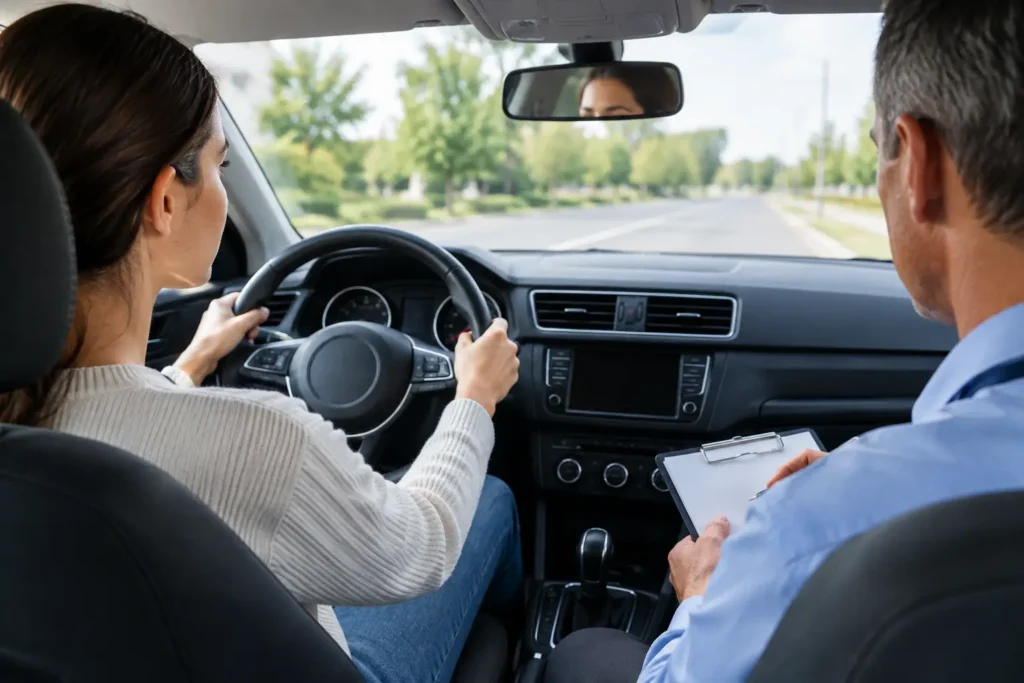
A road test can feel like one high-pressure drive, but the examiner is not looking for perfection. They are looking for safe decisions, consistent vehicle control, and clear awareness of the road around you. Most road test failure causes are not dramatic mistakes. They are small habits that show a driver may not yet be ready to drive independently in real Montreal traffic.
The encouraging part is that these habits can be improved. With structured practice, honest feedback, and an understanding of what the SAAQ examiner is observing, you can replace last-minute anxiety with a clear plan.
The Most Common Road Test Failure Causes
A failed road test usually comes down to safety, observation, or judgment. One serious error can end the exam early, while several smaller errors can also show that more practice is needed. The goal is not to perform a memorized routine. It is to demonstrate that you can read the situation, follow Quebec rules, and respond safely.
Incomplete observation
Many learners know they should check mirrors and blind spots, yet they do not make those checks visible or consistent enough during the test. Before changing lanes, pulling away from the curb, turning, merging, or moving around an obstacle, your observation must be active.
A mirror glance alone is not always enough. For lane changes and similar movements, check your mirrors, signal early, and turn your head to verify the blind spot before moving. This sequence matters because a vehicle, cyclist, or pedestrian may be beside you even when your mirror view appears clear.
At intersections, observation also means looking far enough ahead. Scan for pedestrians entering a crosswalk, vehicles approaching from side streets, changing traffic lights, and road signs that affect your next move. Looking only at the car directly ahead can lead to late braking and rushed decisions.
Weak vehicle control
Stalling, harsh braking, drifting within the lane, or turning too wide can make the drive appear uncertain. These errors are especially common when a learner is concentrating so hard on the examiner’s directions that they stop feeling the car’s speed and position.
Smooth control comes from repetition. Practice braking gradually before stop signs and red lights, keeping both hands ready for steering, and maintaining a centered lane position. If you drive an automatic vehicle, do not let that create a false sense of ease. Steering, speed management, and visual awareness still require deliberate practice.
Parking maneuvers can also reveal weak control. During parallel parking, reversing, or a three-point turn, go slowly enough to observe and correct safely. There is no prize for finishing quickly. A calm correction is generally better than forcing the vehicle into a space or touching the curb.
Unsafe intersection decisions
Intersections are among the most important parts of an SAAQ road exam. Failing to stop fully at a stop sign, entering on an unsafe gap, blocking a crosswalk, or turning without yielding can create an immediate safety concern.
Come to a complete stop behind the stop line or before the crosswalk. If there is no line, stop where you can see clearly without entering the intersection. Then look left, right, and left again before proceeding. This is particularly important at residential intersections, where parked vehicles, pedestrians, and cyclists can limit visibility.
When turning left, yield to oncoming traffic and pedestrians unless you have a protected green arrow. When turning right, check the crosswalk carefully before moving. Even when the road seems empty, use the same safe routine. Consistency tells the examiner that you will make safe choices after the test as well.
Poor speed management
Driving too fast is an obvious problem, but driving far below the speed limit without a reason can also affect your result. The examiner wants to see that you can match your speed to traffic and road conditions while respecting the posted limit.
Watch for school zones, construction areas, temporary signs, and changes in speed limits. On a wet, snowy, or crowded road, a lower speed may be appropriate. The key is to show judgment, not to follow one number without considering the conditions around you.
Keep a safe following distance, too. If the vehicle ahead brakes suddenly and you must react sharply, you were likely following too closely. Leave extra space in poor weather and at higher speeds.
Lane changes, turns, and positioning errors
Late signals, missed blind-spot checks, turning from the wrong lane, and entering the wrong lane after a turn are frequent road test failure causes. These may seem like separate issues, but they often come from the same problem: making decisions too late.
Plan your route one step ahead. If the examiner asks you to turn, check your mirrors and move into the correct lane early when it is safe. Signal before the maneuver, not while you are already moving. During turns, stay in your proper lane and avoid cutting corners. After the turn, continue checking the road instead of focusing only on whether the turn felt successful.
How to Prepare for the Road Test With Purpose
Random practice can build hours behind the wheel, but focused practice builds readiness. Before your test, identify the situations that make you hesitate. It may be merging onto a busy street, parallel parking near traffic, judging a left turn, or understanding right-of-way at an unfamiliar intersection.
Practice those situations repeatedly with a qualified instructor or experienced supervisor who can give specific feedback. Ask more than, “Did I do okay?” Ask what you should observe sooner, where your vehicle position changed, and whether your decision was safe and legal. Clear feedback helps you correct a pattern before it becomes a test-day mistake.
A professional mock road test can be especially useful. It creates the pressure of following directions while managing traffic, signs, pedestrians, and vehicle control. At Ecole Unity, learners can use personalized lessons to focus on the exact skills that need more work before the SAAQ exam.
Build a repeatable driving routine
Under pressure, drivers rely on habits. Create safe habits that work in nearly every situation: scan ahead, check mirrors regularly, signal early, verify blind spots when needed, and maintain space around the vehicle.
Before each maneuver, quietly use a simple mental sequence: observe, signal, position, and move when safe. You do not need to narrate every action to the examiner. You do need to make your safety checks clear and complete.
It also helps to practice in different conditions. A quiet residential street is useful for learning basic control, but test readiness requires experience with busier roads, intersections, parked cars, changing speed limits, and normal distractions. Practice should challenge you without putting you in situations beyond your current ability.
What to Do If You Make a Mistake During the Test
One minor error does not automatically mean you have failed. A missed opportunity to move when traffic was safe, a slightly rough stop, or a parking correction may be noted, but the rest of your drive still matters. Do not let one imperfect moment distract you from the next decision.
Take a breath, return your attention to the road, and continue using your routine. Never try to “fix” a mistake with a sudden maneuver. For example, if you miss a turn, continue safely and wait for the examiner’s next instruction. A wrong route is usually less serious than an unsafe last-second lane change.
If you do not understand a direction, ask the examiner to repeat it. It is better to clarify than to guess. The examiner is evaluating your driving, not your ability to memorize instructions under stress.
A Calm Plan for Test Day
Arrive early, bring the documents required for your appointment, and make sure the vehicle is safe and ready to drive. Check the mirrors, seat position, steering wheel position, and controls before leaving. If you are renting a car for the test, take a few minutes to become comfortable with the signals, wipers, defroster, and parking brake.
During the exam, focus on the road rather than trying to read the examiner’s expression. Drive the way you have practiced: legally, smoothly, and with enough time to make each decision. Confidence does not mean rushing or pretending you are never nervous. It means trusting the safe routines you have built.
Every practice drive is a chance to become the kind of driver who protects passengers, pedestrians, cyclists, and everyone sharing the road. Give yourself the preparation to earn your license with real confidence, not just relief that the test is over.