

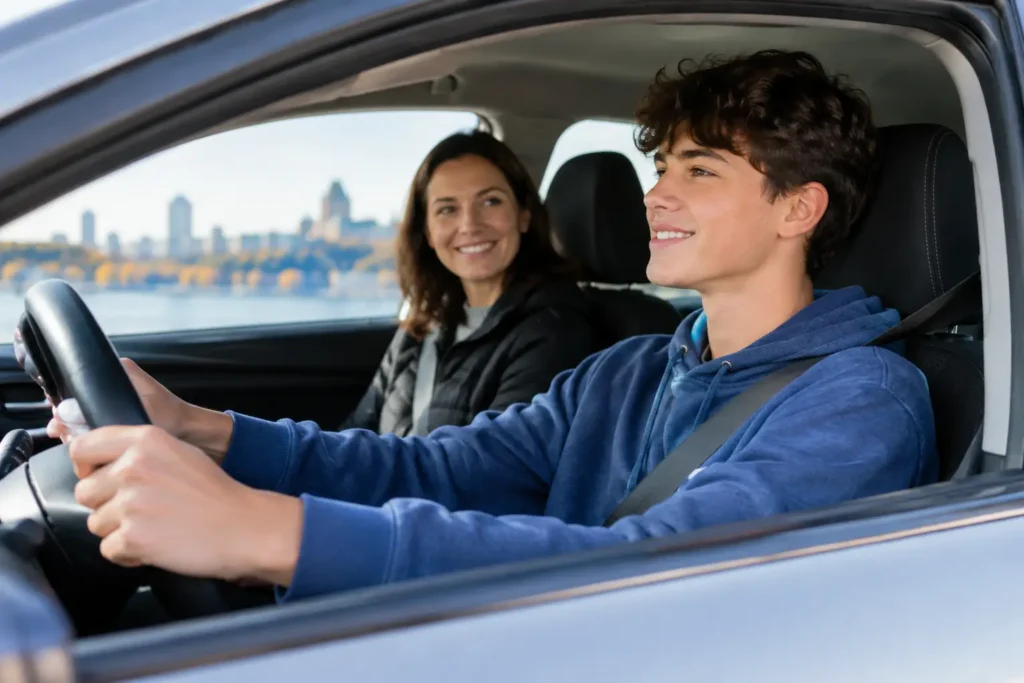
A teen’s first few months behind the wheel can shape the kind of driver they become for years. The best habits for safe teen driving are not flashy techniques or last-minute test tricks. They are small, repeatable choices: checking mirrors before moving, leaving room for mistakes, slowing down when conditions change, and staying fully focused on the road.
For new drivers in Montreal and across Quebec, these habits also make the learning process less stressful. A road test evaluates what happens in a short drive, but safe driving is built one decision at a time. The goal is not simply to pass the SAAQ road test. It is to become the calm, prepared driver who knows what to do after the test is over.
Best Habits for Safe Teen Driving Start Before the Car Moves
Safe driving begins before the engine starts. Make a consistent pre-drive routine part of every lesson and every independent drive. Adjust the seat so you can press the pedals comfortably, set the mirrors, fasten your seat belt, and make sure passengers are buckled in too. Put your phone away before shifting into drive, not after leaving the driveway.
This routine matters because rushing creates avoidable errors. A driver who pulls away with a fogged windshield, an uncomfortable seating position, or a distracting phone has already made the drive harder than it needs to be. In winter, give yourself extra time to clear all snow and ice from the vehicle, including the roof, lights, mirrors, and windows.
Parents can help by encouraging teens to leave a few minutes early. Being late is one of the fastest ways to turn a simple trip into a hurried one. A safe driver plans enough time to drive at the right pace.
Look Far Ahead, Not Just at the Car in Front
New drivers often focus too closely on the vehicle directly ahead. This can make braking feel sudden and intersections feel confusing. Instead, practice looking well ahead in your lane and scanning the full driving environment: traffic lights, crosswalks, parked cars, cyclists, pedestrians, lane markings, and vehicles preparing to turn.
Use your mirrors regularly, especially before slowing down, changing lanes, turning, or merging. Mirror checks should become a natural rhythm, not a nervous habit of staring backward. Your main attention belongs ahead, but quick, frequent mirror checks help you understand what is happening around your vehicle.
At intersections, do not assume another driver will stop simply because they should. Look for movement. Watch the front wheels of vehicles waiting to turn. Check both directions before entering, even when you have the right of way. Defensive driving means giving yourself time to notice risks before they become emergencies.
Build a Space Cushion
Distance is one of the most useful safety tools a teen driver has. Leave enough following distance that you can brake smoothly if traffic slows down. The right amount of space depends on your speed, visibility, traffic flow, and road conditions.
In dry, clear conditions, keep a comfortable gap rather than following closely. Increase it significantly in rain, snow, slush, darkness, or heavy traffic. A larger gap may feel slow when other cars are impatient, but it gives you more time to react without sharp braking. It also makes your driving more predictable for the people behind you.
Avoid driving beside another vehicle for longer than necessary, especially near large trucks. If someone is in your blind spot, adjust your speed carefully so you can create space. Being visible and leaving an exit path are practical habits that reduce risk.
Make Speed Decisions Based on Conditions
The speed limit is the maximum legal speed for ideal conditions, not a promise that every road is safe at that speed. Teen drivers should learn to adjust early for rain, snow, reduced visibility, tight curves, construction zones, school areas, and crowded streets.
This is particularly relevant in Quebec, where changing weather can quickly affect traction and stopping distance. If the road is slippery, slow down before a curve or intersection, not while you are already turning or braking hard. Gentle steering, gradual braking, and smooth acceleration give tires a better chance to maintain grip.
Speed management also means resisting pressure from other drivers. If someone follows too closely, do not speed up beyond what feels safe. Keep a steady pace, avoid sudden moves, and allow them to pass when it can be done safely. Confidence behind the wheel includes knowing that another driver’s impatience is not your emergency.
Treat Your Phone Like It Is Off Limits
Distraction is not just texting. It includes changing music, checking notifications, searching for directions, taking a photo, eating, or turning around to talk to passengers. A few seconds of attention away from the road can be enough to miss a stopped vehicle, a pedestrian, or a changing traffic signal.
Set navigation and music before leaving. If you need to make an adjustment, pull over somewhere safe first. Keep the phone out of reach or use a setting that silences notifications while driving. The more automatic this becomes, the less tempting it is to make an exception.
Passengers can also be distracting, particularly for new drivers. Driving with friends can be enjoyable, but it adds pressure and noise. Start with quiet, supportive passengers and short trips. As skill and confidence grow, teens can gradually handle more complex situations. The safest choice sometimes is limiting passengers until driving feels routine.
Practice the Situations That Feel Uncomfortable
Confidence does not come from avoiding difficult roads. It comes from practicing them with support, one step at a time. A teen who only drives on quiet residential streets may feel overwhelmed by highway merges, busy downtown intersections, parallel parking, or nighttime rain.
Create practice drives with one clear purpose. One session might focus on smooth stops and starts. Another can focus on lane changes, observing blind spots, or reading traffic signs early. Short, focused practice is usually more productive than driving for hours without a goal.
For Quebec learners, professional instruction can help connect these habits to SAAQ expectations and local road rules. Ecole Unity helps students practice with structure, feedback, and a pace that supports real progress. Lessons are a good place to ask questions about situations that feel confusing, rather than guessing when driving alone.
Review Drives Without Turning Them Into Criticism
After a drive, take two minutes to discuss what went well and what to practice next. A parent or supervising driver can ask simple questions: What did you notice at that intersection? When did you decide to slow down? Was there a moment when you felt rushed?
This approach teaches teens to reflect on their decisions. It is more useful than only pointing out mistakes in the moment, when they may already be concentrating on traffic. Feedback should be specific and calm. For example, suggest checking the mirror earlier before braking rather than saying the entire drive was poor.
Follow the Rules Even When Nobody Is Watching
Safe drivers do not treat stop signs, turn signals, seat belts, or speed limits as rules for the road test only. They use them consistently because predictable driving protects everyone. Signal early enough to give other road users time to respond. Come to a complete stop where required. Yield carefully to pedestrians and cyclists. Never drive after using alcohol, cannabis, or any substance that affects attention and reaction time.
It also helps to remember that road rules can differ by location. Teens who are new to Quebec, including newcomers from another country or province, should take time to learn local signs, school-zone expectations, winter-driving practices, and licensing requirements. Asking a qualified instructor is always better than relying on assumptions.
Let Mistakes Become Lessons
Every new driver makes small mistakes: braking too late, missing a turn, choosing the wrong lane, or feeling nervous at a busy intersection. What matters is how they respond. Never try to fix a missed turn with a sudden lane change or sharp turn. Keep driving safely, find a legal place to reroute, and try again.
A mistake is information, not proof that someone cannot drive. With practice, teens learn to recognize hazards earlier, make smoother decisions, and recover calmly when plans change.
The next time you get behind the wheel, choose one habit to practice on purpose. A safer, smarter future is built through those ordinary drives where patience, attention, and good judgment become second nature.