

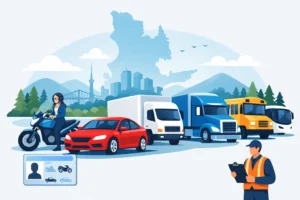
Getting the wrong license class can slow down your progress, cost you extra time, and create confusion at the SAAQ counter. If you are trying to understand saaq license classes quebec, the first thing to know is that Quebec does not use one single driver’s license for every type of vehicle. Your class depends on what you want to drive, whether it is a regular car, a motorcycle, a heavy truck, a bus, or a moped.
For many new drivers, especially teens, adults getting licensed later, and newcomers to Quebec, this is where the process starts to feel complicated. The good news is that the system becomes much easier once you group the classes by purpose. Some are for everyday personal driving. Others are for commercial work. A few are specialty classes that matter only in specific situations.
SAAQ license classes Quebec: the big picture
In practical terms, Quebec license classes are divided into two broad categories. The first is personal-use licensing, which covers most people who want to drive a passenger vehicle, motorcycle, or moped. The second is professional or heavy-vehicle licensing, which applies to drivers operating buses, trucks, tractor-trailers, or other larger vehicles.
That distinction matters because the training, testing, medical standards, and job expectations can be very different. A 17-year-old applying for a regular car license is following a much more guided and gradual path than someone preparing to drive a city bus or transport goods in a heavy truck.
If your goal is simply to drive a car in Montreal or elsewhere in Quebec, you are usually focused on Class 5. If you want to ride a motorcycle, you are looking at Class 6 and its subcategories. If you are planning a career in transport, delivery, or passenger service, then Classes 1, 2, or 3 may be the ones that matter most.
The most common Quebec license classes
Class 5 – Standard passenger vehicle license
Class 5 is the license most people need. It allows you to drive a standard passenger vehicle, which includes most cars, SUVs, and light trucks used for personal transportation. For first-time drivers in Quebec, this is usually the starting point.
If you are a teen beginning the graduated licensing process, or an adult who never got licensed before, Class 5 is likely your path. It typically involves a learner stage, mandatory education for eligible first-time drivers, knowledge testing, and a road test before you receive a full probationary or regular license.
This class is simple in theory, but the learning curve is real. Passing the exam is one goal. Building calm, safe habits in traffic, winter conditions, parking situations, and highway driving is the bigger one.
Class 6 – Motorcycle licenses
Class 6 covers motorcycles, but it is not just one category. There are sub-classes based on engine size and type of motorcycle. That can surprise people who assume that one motorcycle permit covers everything on two wheels.
If you want to ride a motorcycle in Quebec, you need to check which subclass applies to the bike you plan to use. The process often includes mandatory training, a knowledge test, a closed-track evaluation, and a road test. It is more specialized than the Class 5 process because balance, visibility, braking, and risk exposure are different on a motorcycle.
For beginners, this is one area where guessing is a bad idea. Choosing the wrong training route can delay your progress.
Class 6D – Mopeds and scooters
Class 6D is for mopeds and certain scooters with smaller engines. This class is narrower than a motorcycle license and is designed for lower-powered vehicles.
For some younger drivers, this can feel like a simpler entry point into road use. Still, simpler does not mean risk-free. Riders need to understand traffic rules, lane positioning, visibility, and protective habits. Even small scooters share the road with much larger vehicles.
Class 8 – Farm tractor
Class 8 is for farm tractors. It is not a class most city drivers will need, but it exists for people operating this type of vehicle legally in the right setting.
For Montreal-area learners, this usually is not relevant unless work or rural living makes it necessary.
Commercial and heavy vehicle classes
Class 1 – Combination vehicles
Class 1 is for combination vehicles, including tractor-trailers. This is one of the most advanced license classes because these vehicles are large, heavy, and more complex to handle.
Drivers in this category need a strong understanding of turning space, braking distance, load behavior, visibility limits, inspections, and road safety regulations. The responsibility level is much higher than with a regular passenger vehicle.
This class is usually tied to professional driving careers. If that is your goal, expect a more demanding training and testing process.
Class 2 – Buses carrying passengers
Class 2 allows you to drive buses designed to carry passengers. That includes many public transit or school transportation roles, depending on the vehicle and employer requirements.
The technical side matters, but so does the human side. Driving a bus means managing size, blind spots, stops, schedules, and passenger safety at the same time. The standards are stricter for a reason.
Class 3 – Heavy trucks
Class 3 is for heavy trucks, though not necessarily combination vehicles like those in Class 1. It fits many commercial trucking roles involving straight-body heavy vehicles.
For someone entering construction transport, delivery, or industrial driving, this class may be the right fit. It depends on the vehicle type you will operate for work. That is one of the key trade-offs in commercial licensing. A higher class can provide broader driving privileges, but it often requires more training and a bigger commitment.
Class 4 – Specialized vehicles
Class 4 includes several subcategories for specific vehicle uses, such as ambulances, taxis, limousines, and small buses. This class can be confusing because it is not one simple category.
If you are pursuing paid driving work that involves transporting people, do not assume a standard Class 5 license is enough. The exact Class 4 subclass depends on the kind of service you plan to provide.
How to choose the right class for your goal
The easiest way to choose among the SAAQ license classes Quebec offers is to start with one question: what vehicle will you actually be driving most of the time?
If the answer is a family car, compact SUV, or everyday personal vehicle, Class 5 is usually correct. If it is a motorcycle, look at Class 6. If it is a scooter or moped, Class 6D may apply. If your goal is paid work in transport, delivery, passenger service, or trucking, then you need to match the class to the employer’s vehicle type, not just the job title.
That last point matters a lot for newcomers and career changers. Two jobs can both be called driver positions but require very different licenses. A delivery van may fall under one path, while a heavy commercial truck requires another. It depends on weight, configuration, and intended use.
What first-time drivers should watch for
Do not confuse vehicle experience with Quebec eligibility
Many adults arrive in Quebec with years of driving experience from another country and assume they can choose any class right away. Sometimes experience helps. Sometimes exchange agreements or prior records affect the process. But it does not automatically mean the same steps apply to everyone.
Quebec has its own licensing rules, testing standards, and documentation requirements. If you are new to the province, verify what transfers and what does not before registering for training or a test.
Know that training requirements vary by class
Class 5 for new drivers generally follows a structured education path. Motorcycle classes involve specific mandatory training. Commercial classes may require medical checks, more advanced evaluations, and more formal preparation.
That is why comparing one class to another is not always useful. They are built for different risks and responsibilities.
Think beyond the test date
A lot of people choose a licensing path based only on speed. They want the fastest route to a road test. That is understandable, especially if work, family needs, or relocation are pushing you to get on the road quickly.
But the fastest route is not always the smartest one. The better question is whether you will feel confident driving alone after the license is issued. Good preparation saves stress later.
Why guidance makes a difference
Quebec’s licensing system is manageable when the steps are explained clearly. What makes it stressful is not usually the rules themselves. It is the uncertainty around those rules – which class applies, what documents are needed, what training is mandatory, and how to prepare for the right exam.
That is where structured support helps. A school like Ecole Unity can make the process feel less intimidating by connecting the license class to a clear learning plan, especially for beginners and newcomers who want more than just the minimum.
If you are unsure which class fits your situation, slow down and match the license to your real driving goal, not just the vehicle you see today. The right start gives you more than a legal permit. It gives you a safer, more confident path forward.