

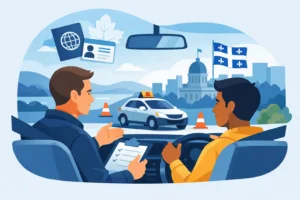
Moving to Quebec often means learning more than a new neighborhood. It can also mean learning a new road system, new traffic rules, and a licensing process that feels unfamiliar at first. A common question we hear is simple: can immigrants take driving lessons? In most cases, yes – and for many newcomers, lessons are one of the smartest ways to build confidence and understand how driving works in Quebec.
That matters whether you have never driven before, have years of experience in another country, or simply want help preparing for the local tests. Driving in Montreal and across Quebec comes with its own expectations, from road signs and winter conditions to SAAQ procedures and exam standards. A structured lesson plan can make that transition much easier.
Can immigrants take driving lessons in Quebec?
Yes, immigrants can take driving lessons in Quebec. Your exact path depends on your status, your age, and whether you already hold a valid driver’s license from another country. Some newcomers need to begin with the standard learner process. Others may be able to exchange an existing license or complete only part of the process.
This is where many people get confused. Being allowed to drive and being allowed to take lessons are not always the same issue. Even if you are still sorting out your Quebec license eligibility, you may still be able to enroll in training, study the local rules, and prepare for the next step. Lessons are not only for first-time drivers. They also help experienced drivers adapt to Quebec laws and testing expectations.
Why driving lessons make sense for newcomers
A lot of immigrants arrive with real driving experience. They know how to handle traffic, park, and stay aware on the road. But local rules can be very different, and small differences matter during both daily driving and official testing.
For example, right turns on red are restricted in some places, school zone behavior is taken seriously, and winter driving requires habits that may be completely new. Lane discipline, stopping distances, pedestrian priority, and observation routines can also be judged differently than in your home country.
That is why lessons are useful even if you already know how to drive. They help you replace guesswork with clear expectations. Instead of wondering what the examiner wants or what the law requires, you practice it directly with an instructor who understands the Quebec system.
Your situation affects the type of lessons you need
Not every immigrant needs the same kind of training. In practice, newcomers usually fall into one of three groups.
If you are a complete beginner
If you have never held a license before, you will usually need to follow Quebec’s regular licensing path. That includes the required driver education program, theory learning, and practical in-car training. This is the most structured route, but it is also the clearest. You build your skills step by step and prepare for both the knowledge and road tests in the proper order.
If you have a foreign license but need a Quebec license
If you already have driving experience from another country, you may not need to start from zero. However, that does not always mean the transition will be automatic. Some countries have agreements that may simplify license exchange, while others do not. Even when you have prior experience, refresher lessons can be very helpful before any test or evaluation.
This is one of those areas where it depends. Two drivers can both be experienced, but one may need only a few adjustment lessons while another benefits from a more complete review of Quebec road habits and exam standards.
If you drove before but have little confidence
This is more common than many people expect. Some newcomers know how to drive in theory or drove years ago, but they feel nervous in fast traffic, downtown streets, or winter conditions. In that case, lessons are less about basic legality and more about rebuilding confidence safely.
A supportive instructor can break that process into manageable steps. You do not need to become comfortable with everything in one week. Progress often starts with simple local roads and gradually moves toward busier routes, parking practice, and test-style driving.
What documents might be needed
The exact documents can vary depending on the type of course or licensing step involved, but schools and licensing authorities generally need enough information to confirm your identity and eligibility. That can include identification, proof of status, or details about a current foreign license.
If you already have a license from another country, you may also need to show that document and possibly provide a translation, depending on the circumstances. The key point is this: do not assume your case is too complicated to start. It is usually better to ask directly, explain your situation clearly, and find out what applies to you.
For many newcomers, the hardest part is not the paperwork itself. It is the uncertainty. A school that works with immigrants regularly can often make the process feel much more straightforward by explaining what matters now and what can wait until later.
What immigrants usually learn in driving lessons
Driving lessons in Quebec are not just about operating the car. Good instruction helps you understand how to drive safely and how to meet official standards.
That includes observation habits, mirror checks, right-of-way decisions, speed management, parking, lane changes, intersections, and hazard awareness. If you are preparing for the SAAQ process, lessons may also include theory support and practical test preparation.
For immigrants, one of the biggest benefits is context. You are not just memorizing rules. You are learning how those rules appear in real traffic situations. That makes a major difference when you are nervous, under time pressure, or facing unfamiliar roads.
Can immigrants take driving lessons before getting a Quebec license?
In many cases, yes, but the form those lessons take may vary. Some learners enter a full beginner education program. Others take evaluation or refresher sessions because they already have experience. The right starting point depends on your legal status, your current documents, and your driving background.
This is why personalized guidance matters. The best path is not always the longest one or the cheapest one on paper. It is the one that matches your actual situation. A beginner who skips fundamentals may struggle later. An experienced driver who repeats unnecessary training may waste time and money.
At Ecole Unity, this student-by-student approach matters because newcomers often need more than a standard lesson package. They need clear answers, practical preparation, and an instructor who understands that the licensing process can feel overwhelming at first.
What to expect if you are preparing for the road test
For many immigrants, the real pressure starts when the road test gets close. You may know how to drive, but testing conditions can still feel stressful. Examiners look for specific habits, and even strong drivers can lose marks for details they did not realize mattered.
This is where focused lessons help most. A road test preparation lesson can reveal patterns you may not notice on your own, such as incomplete stops, late mirror checks, weak shoulder checks, or hesitation at intersections. These are fixable issues, but they are easier to fix before test day than during it.
A lesson close to the exam can also help you feel more settled in the vehicle, more familiar with the testing style, and more aware of common local challenges. That kind of preparation is often worth more than simply spending extra hours driving without feedback.
Choosing the right school as a newcomer
Not every driving school is equally prepared to support immigrants. Some schools teach the basics well but may not be as strong when it comes to guiding newcomers through Quebec’s licensing questions.
A good fit should feel clear, patient, and organized. You want instructors who can explain local rules in plain language, adapt lessons to your experience level, and help you understand what comes next. Affordability matters too, especially when you are managing the costs of settling into a new place. Flexible payment options and structured course plans can make training much more manageable.
Most of all, you should not feel judged for asking basic questions. Newcomers often worry about saying the wrong thing, bringing the wrong document, or misunderstanding the process. Good instruction removes that pressure. It gives you a path forward.
Learning to drive in a new country is not just about passing a test. It is about feeling safe, capable, and independent in your daily life. If you are wondering whether you can start, the answer is usually yes – and getting the right support early can make every step after that feel a lot lighter.