

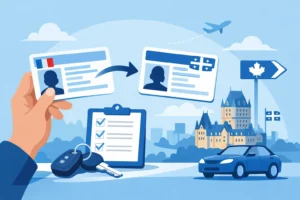
If you recently moved to Quebec and already know how to drive, the question is not whether you can get behind the wheel – it is how to switch foreign licence status into a Quebec driver’s license without wasting time, missing documents, or booking the wrong appointment. For many newcomers, this step looks simple at first and then quickly turns into a mix of eligibility rules, waiting periods, and country-specific exceptions.
The good news is that the process is manageable when you know what Quebec is actually looking for. The less good news is that it does depend on where your current license was issued, how long you have held it, and whether your driving experience can be recognized.
How to switch foreign licence: start with your eligibility
In Quebec, a foreign driver’s license is not always exchanged under the same rules. Some drivers may qualify for a direct exchange. Others may need to pass a knowledge test, a road test, or both. In some situations, the license may not transfer in the way people expect, especially if the document is expired, temporary, or unsupported by clear driving history.
The first thing to check is whether your country or jurisdiction has a reciprocal agreement with Quebec. If it does, you may be able to exchange your valid foreign license for a Quebec one with fewer steps. If it does not, Quebec may still recognize some of your experience, but you could be asked to prove your driving background and complete testing.
This is where many people get stuck. They assume that holding a license is enough. In practice, Quebec usually wants to confirm that the license is valid, that it matches your identity documents, and that your driving experience is real and traceable.
What documents are usually required
Most applicants should expect to provide their current foreign driver’s license, proof of identity, and proof that they are authorized to stay in Quebec. Depending on the situation, you may also need proof of residency in Quebec and documents that confirm when your license was first issued.
That last point matters more than many people realize. If your license has been renewed several times, the card itself may only show the latest expiry date, not the original issue date. Quebec may ask for an official driving record or another document from the licensing authority in your home country to show how long you have actually been licensed.
If your documents are not in French or English, a certified translation may be required. This is one of the most common causes of delay. People show up with a valid document, but not with a version that can be officially reviewed.
You should also make sure names match across documents. Small differences in spelling, order of names, or missing middle names can create problems, especially if your passport, immigration papers, and driver’s license do not line up neatly.
Booking the right appointment matters
You generally cannot handle this process by walking in unprepared and hoping for the best. In most cases, you will need an appointment with the licensing authority to assess your foreign license and determine whether you qualify for an exchange or need testing.
Before that appointment, it helps to organize your file as if someone is seeing your case for the first time – because they are. Bring originals, not just copies, and keep translations attached to the correct document. If you have a driving history certificate, bring that too, even if you are not sure it will be requested. It is easier to have one extra paper than to rebook because a key detail was missing.
When a direct exchange is possible
For drivers from certain countries, switching to a Quebec license may be relatively straightforward. If there is a recognized agreement and your license is valid, you may be able to exchange it without completing the full learner process.
That does not mean every case is automatic. The license still needs to be genuine, current, and supported by the right identification. If the foreign license is suspended, expired for too long, or difficult to verify, the exchange may no longer be simple.
Age and class of license can matter too. A standard passenger vehicle license is treated differently from commercial classes, motorcycle classes, or special endorsements. If you are trying to transfer more than basic driving privileges, expect closer review.
When tests or lessons may still be required
If there is no reciprocal agreement, or if your experience cannot be fully recognized, you may need to complete one or both of the required exams. That often includes a knowledge test on Quebec road rules and a practical road test.
This is where confidence can become misleading. Plenty of experienced drivers are comfortable on the road but still struggle with local rules, signs, right-of-way habits, or exam expectations. Quebec testing is not only about whether you can operate a car. It is about whether you can drive according to Quebec standards, safely and consistently.
For newcomers, this is often the smartest moment to get structured support. A few focused lessons can help you adjust to local road habits, school zones, winter conditions, mirror checks, lane discipline, and what examiners actually look for during a road test. Ecole Unity regularly helps drivers in this exact situation – people who are not beginners, but who still need a clear path into the Quebec system.
Experience helps, but proof helps more
One of the biggest trade-offs in this process is that real driving experience is valuable, but only if it can be documented. Someone who drove for ten years abroad may still be treated cautiously if they cannot prove when they were licensed or if the record is incomplete.
On the other hand, a driver with fewer years of experience but a clean, well-documented file may move through the process more smoothly. That can feel frustrating, but it reflects how licensing works in Quebec. The system relies on documents, not just personal explanation.
If you still have access to your home country’s licensing authority, it is worth requesting an official abstract or confirmation letter early. Even if you are not asked for it at first, it can save time later.
Common mistakes that slow everything down
The most common problem is assuming all foreign licenses are handled the same way. They are not. Rules can differ depending on the issuing country, the class of vehicle, and how long you have been in Quebec.
Another frequent mistake is waiting too long to act. New residents are usually allowed to drive for a limited period with a valid foreign license, but that does not mean you should postpone the exchange. Delays can leave you rushing to gather translations, appointment slots, and supporting records at the last minute.
Some drivers also underestimate the test portion. They think, “I already know how to drive,” and skip preparation. Then they run into trouble with Quebec-specific rules or road test habits that were never emphasized where they learned. A short preparation plan is often cheaper and less stressful than failing and repeating the process.
If your case is not straightforward
Not every applicant fits neatly into the standard path. Maybe your license has expired recently. Maybe you changed status in Canada and your documents are in different names. Maybe your original license was replaced after a move, and the issue date no longer appears on the card.
These situations do not always block the process, but they usually require stronger documentation. The key is not to guess. If your file has complications, prepare for extra verification and build in more time than you think you need.
It also helps to separate two questions: whether you are legally allowed to drive right now, and whether you are ready to qualify for a Quebec license. Those are related, but they are not identical. A person may temporarily be allowed to drive with a foreign license and still need substantial preparation before passing Quebec exams.
What to do before your road test, if one is required
If you are asked to take a road test, treat it like a local exam, not a casual drive. Review Quebec signs and rules, practice in the areas that commonly create point deductions, and spend time driving in realistic city conditions.
For many newcomers in Montreal, the challenge is not basic steering or parking. It is combining observation, speed control, lane choice, pedestrian awareness, and calm decision-making in a new traffic culture. That takes practice.
A focused lesson with an instructor can help identify habits you no longer notice in your own driving. Rolling stops, late shoulder checks, wide turns, and hesitation at intersections are small issues that can become test failures quickly.
Switching your license is really about more than paperwork. It is about showing that your driving experience can translate safely into Quebec roads. If you approach the process early, stay organized, and prepare for the local standards instead of relying only on past experience, you give yourself a much better chance of moving forward with confidence. Your journey starts here, and a clear plan makes the next step much easier.