

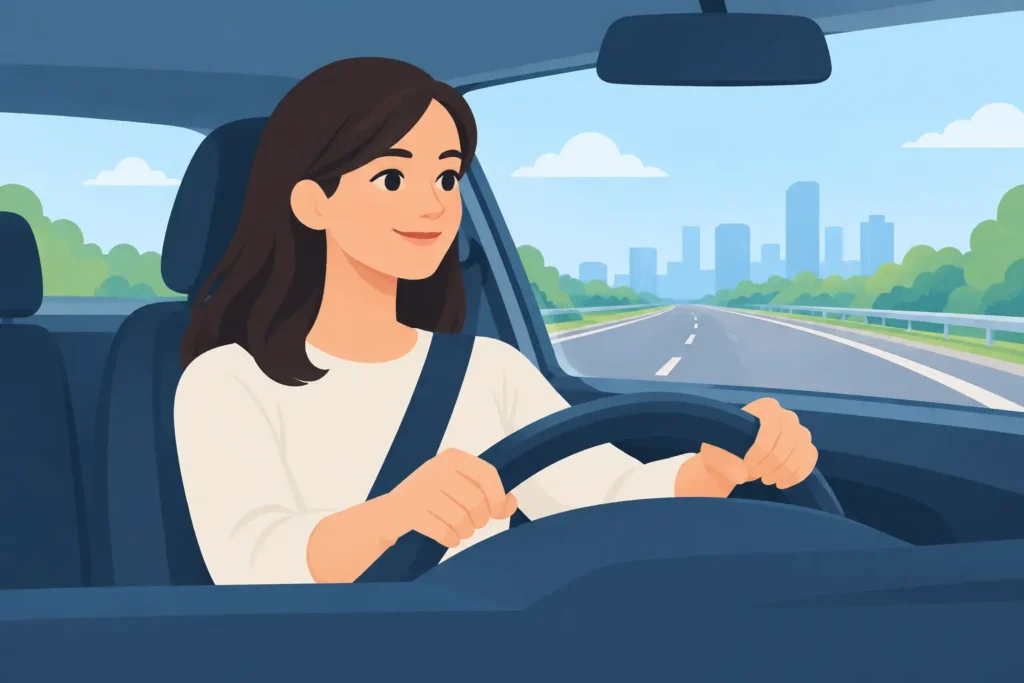
The first time you place a car in Drive, your left foot may instinctively look for a clutch that is not there. That is one reason automatic driving for beginners can feel both easier and surprisingly unfamiliar. The car handles gear changes for you, but safe driving still depends on your attention, braking control, road awareness, and ability to make calm decisions.
For new drivers in Montreal and across Quebec, an automatic vehicle can reduce the number of tasks to manage at once. It gives you more mental space to read signs, scan intersections, judge traffic, and build good habits. The goal is not simply to make the car move. It is to become a safe, confident driver who is ready for everyday roads and the SAAQ road test.
Start With the Automatic Gear Selector
Before moving, take a moment to understand the letters on the gear selector. In most automatic vehicles, P means Park, R means Reverse, N means Neutral, and D means Drive. Some cars also have lower gear settings, an L position, or a manual mode. As a beginner, you will usually use Park, Reverse, and Drive during regular lessons.
Keep your right foot responsible for both pedals. Your left foot should rest on the footrest, not hover over the brake. Using two feet can lead to sudden braking because your left foot is not used to the pressure needed for a brake pedal.
To start safely, press the brake firmly, start the vehicle, check that the parking brake is released when appropriate, select the correct gear, and look around before easing off the brake. Most automatic cars begin to creep forward or backward without pressing the gas. This slow movement is normal and useful for parking, stop-and-go traffic, and tight spaces.
Automatic Driving for Beginners: Build Pedal Control
Automatic cars respond quickly when you press the accelerator, especially at low speeds. New drivers sometimes press too hard because they expect the car to need more effort. Start with light, steady pressure. Your aim is smooth acceleration, not fast acceleration.
Braking takes practice as well. Look far ahead so you can recognize changing lights, stopped traffic, pedestrians, or turns early. When you see a reason to slow down, lift your foot off the gas first. Then apply the brake gradually. This gives passengers a more comfortable ride and gives you more control.
A simple habit can make a major difference: position your right heel on the floor and pivot your foot between the accelerator and brake. Do not lift your whole leg unnecessarily. This helps you find the correct pedal more consistently.
Practice starts and stops in a quiet area with a qualified instructor before dealing with busy streets. Once you can accelerate, maintain speed, and brake smoothly, you can focus more fully on steering, mirrors, signs, and traffic flow.
Set Up the Driver’s Seat Before Every Lesson
Confidence begins before the car moves. Adjust the seat so you can press the brake fully without stretching your leg. Your back should be supported, your wrists should rest comfortably near the top of the steering wheel, and your head restraint should sit behind the middle of your head.
Set your mirrors before entering traffic. The rearview mirror should show the full rear window. Your side mirrors should reduce blind spots, but mirrors never replace shoulder checks. In Quebec, checking your blind spot is essential before changing lanes, merging, pulling away from the curb, or turning when cyclists may be nearby.
Fasten your seat belt and ask passengers to do the same. Then remove distractions. Put your phone away, set navigation before you begin, and keep music low enough to hear emergency vehicles and your instructor’s guidance.
Learn to Look Far Beyond the Hood
Beginners often stare at the road directly in front of the car. This makes steering less stable and leaves little time to react. Instead, keep your eyes moving. Look well ahead, check mirrors regularly, watch the sides of the road, and return your focus to the space where you are traveling.
At intersections, do not assume another driver will stop just because they should. Check for vehicles turning across your path, pedestrians entering the crosswalk, cyclists beside the curb, and cars approaching quickly from behind. Montreal traffic can be busy, and calm observation is more useful than rushing to keep up with others.
When approaching a green light, ask yourself whether you can safely clear the intersection. When approaching a yellow light, prepare to stop unless stopping suddenly would create a hazard. A safe driver plans ahead instead of making last-second decisions.
Parking Is About Pace, Not Perfection
Many learners feel comfortable driving straight but become nervous when parking. Automatic cars help because you can control very low speeds with the brake and the vehicle’s natural creep. There is no prize for finishing a parking maneuver quickly.
For parallel parking, begin with proper positioning, check mirrors and blind spots, and move slowly. Turn the wheel in stages while checking your surroundings. If the vehicle is not aligned, it is better to correct calmly than force the space. On a road test, observation and control matter as much as the final position.
For reverse parking, use your mirrors, turn your head to look behind when reversing, and move at a walking pace. Backup cameras are helpful, but they do not replace looking around the vehicle. You must remain responsible for checking the path behind you.
Understand the Trade-Offs of an Automatic Vehicle
An automatic transmission removes clutch control and manual gear shifting, which can make early lessons feel less overwhelming. It can be an excellent choice for learners who want to focus on traffic rules, defensive driving, and confidence in city traffic.
However, easier shifting does not mean easier driving in every situation. You still need to manage speed on hills, maintain safe following distance, understand right-of-way rules, and respond correctly in poor weather. A driver who relies only on the car’s features may miss important hazards.
Your license and training choices may also matter. If you take a road test in an automatic vehicle, make sure you understand the licensing conditions that apply to your situation. Quebec requirements can change, and a certified driving school can explain the current path clearly before you book an exam.
Prepare for Real Quebec Road Conditions
Quebec driving requires attention to more than lane markings and traffic lights. Winter can bring snow, ice, reduced visibility, and longer stopping distances. In these conditions, slow down early, leave more space behind the vehicle ahead, brake gently, and avoid abrupt steering movements.
Construction zones, school areas, bus lanes, and pedestrian-heavy streets also require patience. Read signs carefully. Speed limits and parking rules can change by block, particularly in urban areas. If you are new to Quebec or have driven in another country, structured lessons can help you connect your existing experience with local expectations.
A road test is not about proving that you never feel nervous. It is about showing that you can drive safely even when you need a moment to think. Use clear observation, controlled speed, complete stops, proper signaling, and steady steering to show your judgment.
Practice With a Clear Plan
Random practice can help, but planned practice builds skills faster. Start in low-pressure areas, then progress to residential streets, larger intersections, busier roads, parking lots, and highway entrances when you are ready. Repeat the skills that challenge you instead of avoiding them.
Professional instruction gives you feedback that a family member or friend may not be able to provide. At Ecole Unity, beginner-focused lessons can help you understand vehicle control while preparing for Quebec rules and SAAQ testing expectations. The right instructor will correct small habits early, before they become difficult to change.
Give yourself permission to learn gradually. Smooth braking, effective mirror checks, careful lane positioning, and calm decisions are built one drive at a time. Each lesson is a chance to move with more awareness and leave the road safer for everyone around you.