

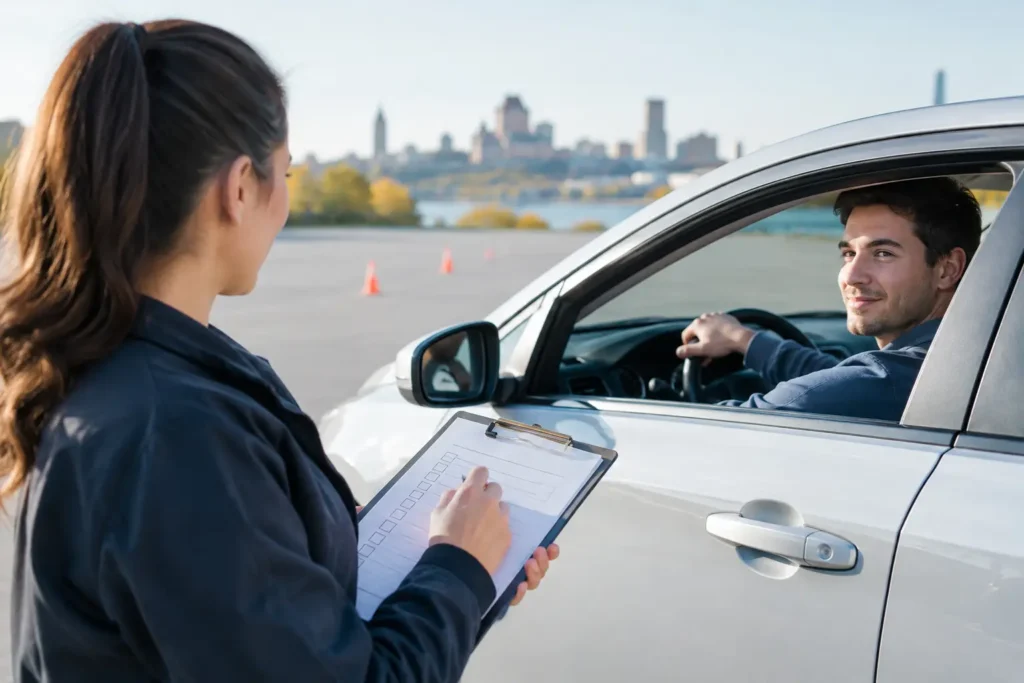
Your road test begins before the examiner gets into the car. A missing document, warning light, or rushed start can create stress that follows you through every turn. Use this Class 5 road test checklist to prepare for the SAAQ exam with a clear plan, whether you are a first-time driver, returning to driving, or getting used to Quebec rules as a newcomer.
The goal is not to look perfect. It is to show that you can make safe, legal decisions consistently, even when you feel nervous.
What the Class 5 road test is really measuring
The Class 5 road test evaluates more than basic vehicle control. The examiner is looking for a driver who observes carefully, follows signs and speed limits, communicates intentions, and adapts to real traffic conditions without creating risk for others.
That means small habits matter. A complete stop at a stop sign, a visible shoulder check before changing lanes, and a calm response when another driver makes an unexpected move all demonstrate safe judgment. You do not need to drive aggressively or overcomplicate every maneuver. Smooth, alert, predictable driving is the standard to aim for.
Your test route can include residential streets, busier roads, intersections, lane changes, parking, and other everyday situations. The exact route varies, so memorizing one area is less useful than practicing the skills you can apply anywhere.
Class 5 road test checklist: documents and appointment basics
Start preparing the day before your test rather than searching for items in the parking lot. Bring the documents requested for your appointment, including your valid learner’s license or other required licensing document. If you are using a vehicle provided by someone else or renting one for the test, make sure the registration and insurance information are available as required.
Before leaving home, confirm your appointment location and arrival time. Plan to arrive early enough to park, settle yourself, and listen carefully when your name is called. Arriving too early is better than arriving rushed, especially around Montreal traffic, construction, or limited parking.
Check these essentials before test day:
- Your required identification and valid learner’s license
- Your road test appointment details
- The vehicle registration and proof of insurance, when required
- Glasses or contact lenses if your license requires vision correction
- A safe, roadworthy vehicle with enough fuel for the test
Requirements can change, and individual situations differ. If you have questions about eligibility, documents, or the vehicle you plan to use, confirm the current SAAQ instructions before your appointment.
Make sure your test vehicle is ready
A vehicle issue can prevent the test from starting. The examiner may inspect basic safety items before you drive, so do not assume that a car is acceptable simply because it runs.
Walk around the vehicle the day before. Check that the headlights, brake lights, turn signals, and hazard lights work. Look at the tires for obvious damage or low pressure. Make sure mirrors are secure, windows are clear, windshield wipers work, and the windshield washer fluid is filled if conditions may require it.
Inside the car, remove unnecessary clutter. You need a clear view through every window and easy access to controls. Adjust the driver’s seat, steering wheel, and mirrors before moving. Know where to find the defroster, parking brake, headlights, turn signals, hazard lights, and windshield wipers without taking your eyes off the road for too long.
Do not ignore dashboard warning lights. A serious warning light, damaged tire, cracked windshield that blocks your view, or faulty signal can become a problem at the inspection. If you are not confident that your vehicle is suitable, a road test car rental can provide a properly prepared option. At Ecole Unity, this can also give learners the comfort of testing in a car they have practiced with.
The driving habits examiners notice first
Your first few minutes set the tone. Once you enter the vehicle, take your time getting organized. Adjust your seat and mirrors, fasten your seat belt, and make sure passengers are secured. Begin only when you are ready and it is safe to do so.
Examiners need to see your observations. Move your head when checking mirrors and blind spots. A quick glance may be enough for an experienced driver, but visible checks help show that you are scanning deliberately. Check mirrors regularly, especially before slowing down, turning, changing lanes, or pulling to the side of the road.
At intersections, scan left, center, and right. Watch for pedestrians, cyclists, and vehicles that may not respect a sign or signal. When turning right, check the curbside area carefully. When turning left, wait for a safe gap and keep your wheels straight until you begin the turn so you are not pushed into oncoming traffic if hit from behind.
Keep a safe following distance. If traffic stops suddenly, you should have enough space to brake smoothly rather than react sharply. In rain, snow, darkness, or heavy traffic, give yourself more room. Quebec weather can change road conditions quickly, and adjusting your driving to conditions shows mature judgment.
Maneuvers to practice before your appointment
You may be asked to complete common driving tasks, but safe observation is usually more important than completing a maneuver quickly. Practice in the type of vehicle you will use for the test whenever possible.
Focus on these skills during your final lessons:
- Starting, stopping, and steering smoothly
- Parallel parking with careful observation and control
- Backing up safely while checking around the vehicle
- Entering and leaving a parking space
- Lane changes with mirror checks, signals, and shoulder checks
- Left and right turns into the correct lane
- Following speed limits and adjusting speed before curves or turns
- Stopping and restarting on an incline if this is part of your local practice route
Parallel parking makes many learners anxious, but it does not need to be rushed. Signal, observe, position the car correctly, and move slowly. You can make careful adjustments when safe. What hurts your result is forcing the maneuver, failing to observe traffic, or contacting another vehicle or object.
For lane changes, use a consistent sequence: check mirrors, signal, check the blind spot, move only when there is enough space, then cancel the signal. Do not change lanes just because another driver is close behind you. Wait for a safe opening and stay predictable.
Common mistakes that can cost you points
Many road test errors come from pressure, not lack of knowledge. Drivers may know the rule but forget to apply it because they are focused on the examiner. The best defense is a simple routine: look ahead, check mirrors, identify signs, manage speed, and leave space.
Watch for rolling stops. Come to a complete stop where required, then scan before moving. Be careful around school zones, pedestrians, cyclists, parked cars, and uncontrolled intersections. If your view is blocked, creep forward only after stopping and continue observing.
Speed management is another frequent challenge. Driving too fast is unsafe, but driving far below the limit without a reason can also disrupt traffic. Choose a speed that matches the posted limit and conditions. Ease off the accelerator early when approaching a stop, turn, or changing traffic pattern rather than braking hard at the last moment.
If you make a minor mistake, do not let it take over the rest of the test. Correct it safely and continue. Missing a turn is usually better than making a sudden unsafe movement to catch it. The examiner is assessing your driving decisions, not your ability to follow a perfect route.
How to manage road test nerves
Feeling nervous means the test matters to you. The goal is to keep that energy from making your driving rushed or stiff. Get enough sleep, eat something light, and avoid scheduling your day so tightly that a delay feels like a disaster.
Before the test, take a few slow breaths and remind yourself of your routine: seat, mirrors, belt, signals, shoulder checks, space. During the drive, listen fully to each instruction. If you do not understand, politely ask the examiner to repeat it. Guessing creates unnecessary mistakes.
A final practice lesson close to test day can be especially helpful for drivers who have not spent much time in Quebec traffic or who are switching from driving experience in another country. A qualified instructor can identify habits that may be safe elsewhere but do not match local road rules or SAAQ expectations.
You have prepared for more than one appointment. Every careful observation, controlled stop, and patient decision is part of becoming a safer driver. Bring that steady approach to the test, and let your training guide the next move.