

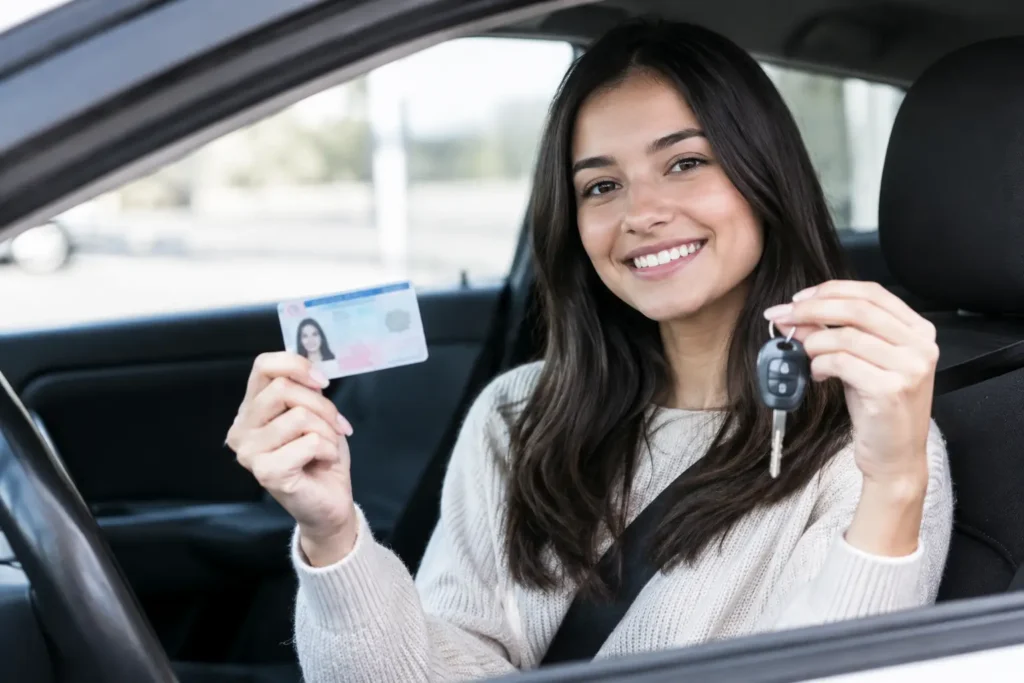
Getting behind the wheel for the first time is exciting, but the learner permit versus licence question can feel confusing when you are trying to follow Quebec’s SAAQ process. The difference matters because each stage gives you different driving privileges, responsibilities, and next steps. Knowing where you are in the process helps you practice legally, prepare with confidence, and avoid costly delays.
In Quebec, people often use the words “permit” and “licence” casually. However, the official documents and rules are not interchangeable. A learner’s licence is your supervised learning stage. A probationary licence gives you the right to drive alone after you pass the road test, but with conditions. A full driver’s licence comes later, once you have completed the required probationary period.
Learner Permit Versus Licence: The Main Difference
A learner’s licence is designed for practice. It allows you to build driving skill in real traffic, but you cannot drive alone. You must be accompanied by an eligible supervising driver every time you are behind the wheel, except when you are taking lessons with a certified driving instructor.
A driver’s licence, on the other hand, generally means you have earned the legal right to operate a vehicle independently. In Quebec’s graduated licensing system, this begins with a probationary licence, not immediately with a full Class 5 licence. This staged approach gives new drivers time to gain experience while following restrictions intended to reduce risk.
For beginners, newcomers, and parents supporting a teen driver, the simplest way to remember the difference is this: a learner’s licence lets you learn under supervision; a licence lets you drive independently, subject to the conditions of your licence class and stage.
What a Learner’s Licence Allows You to Do
Before receiving a learner’s licence in Quebec, most first-time drivers must complete the early stages of the mandatory driving education program and pass the SAAQ knowledge test. Applicants must also meet the age requirement, provide the required identification, and obtain parental consent if they are under 18.
Once you have your learner’s licence, you can practice on public roads with an accompanying driver who meets Quebec’s eligibility requirements. That person must hold a valid full driver’s licence for the appropriate class and have sufficient driving experience. They are not simply a passenger. They should be alert, sober, able to provide guidance, and ready to help you make safe decisions.
Your learner’s licence is a real legal driving document, but it comes with major limits. You cannot use it to drive by yourself to school, work, a friend’s home, or an appointment. Even if you feel comfortable with a route, solo driving must wait until you pass the road test and receive the next-stage licence.
Learner drivers must also follow zero-alcohol rules. This is not a detail to take lightly. Alcohol, cannabis, fatigue, distraction, and speeding can quickly turn a routine practice drive into a dangerous situation. The goal of the learner stage is not to rush through hours behind the wheel. It is to develop calm habits that protect you, your supervisor, pedestrians, cyclists, and other road users.
Practice Is More Than Learning to Steer
Many new drivers can make a turn or park after a few lessons. The harder part is learning to observe, predict, and respond safely. During the learner stage, practice should include quiet residential streets, busy intersections, highway entrances, parking lots, night driving, wet-weather driving, and routes with pedestrians or cyclists.
It also helps to practice the decisions that the SAAQ examiner will be watching for: complete stops, proper mirror checks, speed control, lane positioning, yielding, shoulder checks, and safe communication with other drivers. Repeating these skills in different conditions builds judgment, not just muscle memory.
What Changes When You Get a Probationary Licence
After holding a learner’s licence for the required period, completing the required training, and passing the SAAQ road test, you may receive a probationary licence. This is the stage that allows you to drive without a supervising driver.
That new freedom comes with responsibility. A probationary licence is not the same as a full Class 5 licence. New drivers remain subject to conditions, including zero-alcohol requirements and demerit-point limits. Certain passenger restrictions may also apply to younger probationary drivers during late-night hours. These rules are intended to reduce the risks that are highest for inexperienced drivers, especially when driving with friends or after dark.
The probationary period gives you time to turn supervised practice into independent, reliable driving. You will make decisions alone, manage unexpected traffic, plan your route, and handle changing road conditions. That is why passing the road test should be treated as the beginning of independent learning, not the finish line.
A Full Licence Comes Later
A full Class 5 driver’s licence is the final standard passenger-vehicle stage for most Quebec drivers. To reach it, you must successfully complete the probationary period while respecting the conditions of your licence and avoiding suspensions or other issues that could affect your progress.
The timeline can depend on factors such as your age, your driving record, and the type of licence you hold. Requirements and administrative rules can change, so it is wise to confirm current SAAQ details before booking an exam or making plans around a specific date.
For newcomers, it is especially important not to assume that driving experience from another country automatically gives you the same privileges in Quebec. Depending on where your previous licence was issued, you may need an exchange, a knowledge test, a road test, or additional documentation. Starting with the right information can save considerable time and frustration.
How Long Does Each Stage Take?
Quebec’s licensing path is structured deliberately. For a first-time driver, the learner stage commonly involves holding the learner’s licence for at least 12 months while completing the required driving education program. After passing the road test, the length of the probationary period may vary based on age and individual circumstances.
This can seem slow when you are eager to drive independently. Still, there is a practical benefit: you have time to build experience before driving alone every day. A driver who practices regularly over several months is usually better prepared than someone who only drives occasionally and crams before the road test.
Consistency matters more than long, stressful practice sessions. One or two focused drives each week can help you improve steadily. Use each lesson to work on a specific skill, such as lane changes, parallel parking, merging, or scanning intersections. Then revisit that skill in a different neighborhood or traffic condition.
Choosing the Right Support for Your Stage
A complete driving course gives you structure throughout the learner stage, including theory instruction and practical lessons. It can be particularly helpful if you are a complete beginner, nervous about driving in Montreal traffic, or unfamiliar with Quebec road rules.
If you already have some experience, targeted lessons may be a better fit. An instructor can identify habits that may cause problems on the SAAQ road test, such as incomplete stops, missed shoulder checks, weak observation at intersections, or poor parking technique. Correcting those habits before exam day is often easier than trying to fix them under pressure.
At Ecole Unity, students can move through the licensing path with certified instruction, clear preparation for theory and road tests, and practical support such as road-test vehicle rental. The focus is not only on passing. It is on helping you become a safer, more confident driver when you are finally on the road alone.
Prepare for Independence, Not Just the Exam
The learner permit versus licence transition is a major milestone because it changes what you are allowed to do and how much responsibility you carry. Take the learner stage seriously, ask questions whenever a rule is unclear, and practice until safe habits feel natural rather than forced.
When the time comes to take your road test, aim for more than a passing score. Aim to leave the test center ready to make thoughtful, safe choices on every drive.