

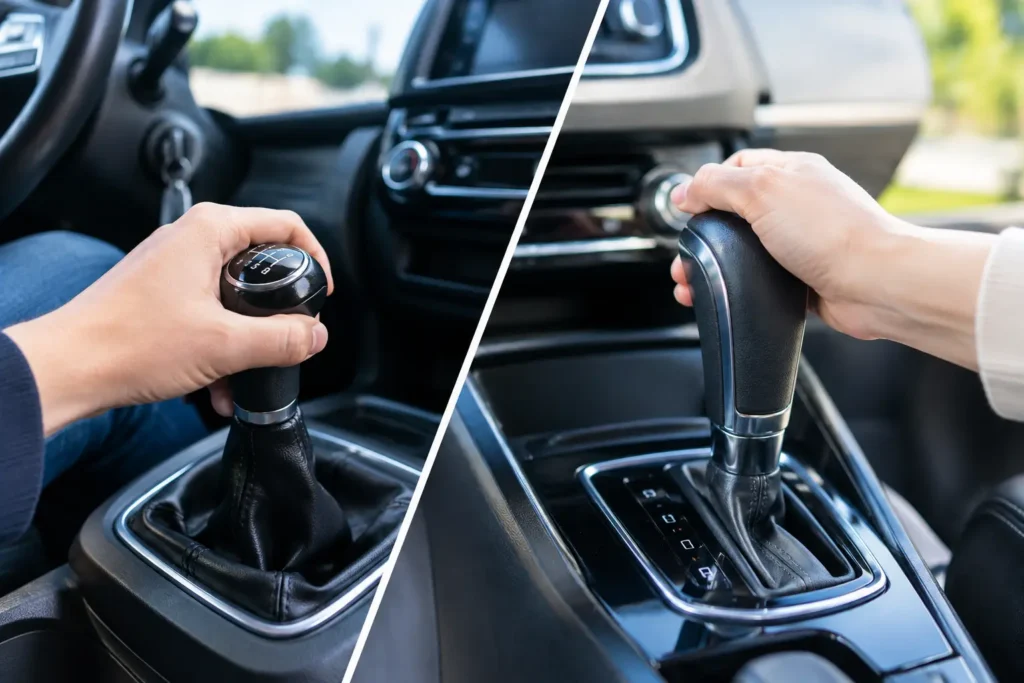
A manual car can feel exciting until you are stopped on a Montreal hill with traffic close behind you. An automatic can feel simpler from the first lesson, but it may not give you the same flexibility later. When comparing manual vs automatic driving lessons, the right choice is not about which option is better for everyone. It is about which vehicle helps you learn safely, meet Quebec licensing requirements, and feel ready to drive independently.
For a first-time driver, the decision can shape every practical lesson. For a newcomer who has driven elsewhere, it can affect how quickly you adjust to local roads, winter conditions, and SAAQ testing procedures. Taking a little time to choose your training vehicle can save stress and help you make steady progress.
Manual vs Automatic Driving Lessons: The Main Difference
The biggest difference is the number of tasks you manage while driving. In an automatic vehicle, the car shifts gears for you. You focus on steering, braking, accelerating, scanning intersections, checking mirrors, and responding to traffic conditions.
In a manual vehicle, you also need to use a clutch pedal and shift gears at the right time. That requires coordination between both feet and one hand, especially when starting from a stop, slowing down, turning, or driving uphill. At first, a learner may spend a lot of attention on avoiding a stall. With practice, gear shifting becomes more natural, but it adds another skill to master.
Neither choice removes the need to become a safe driver. Every learner still needs to understand right-of-way rules, school zones, parking, lane changes, pedestrian awareness, defensive driving, and Quebec road signs. The difference is how much mental energy is available for those skills during the early stages of training.
Why Many Beginners Choose Automatic Lessons
Automatic driving lessons are often the most comfortable starting point for complete beginners. Without a clutch or gear stick to manage, students can concentrate on the driving environment from day one. This can be especially helpful in busy areas of Montreal, where learners may encounter frequent stops, buses, cyclists, pedestrians, narrow streets, and complex intersections.
An automatic vehicle can also make lessons feel less intimidating for adults who are learning later in life. Many adult learners balance training with work, family, or school. They may want to build practical confidence efficiently rather than spend extra time developing manual transmission coordination.
For newcomers to Quebec, automatic lessons can provide a clear path to understanding local driving expectations. If you are already adapting to new signs, speed limits, winter driving habits, and SAAQ procedures, reducing the mechanical demands of the vehicle may make the learning process easier.
Automatic training is not a shortcut around good driving habits. A strong instructor will still teach you to look well ahead, maintain safe following distances, judge gaps carefully, and stay calm when traffic changes quickly. The goal is to make the vehicle easier to operate so you can develop sound judgment on the road.
Automatic lessons may be a good fit if you:
You expect to drive an automatic vehicle after getting licensed, want to focus quickly on road awareness, feel nervous about learning, or need a practical option that fits a busy schedule. They are also a sensible choice for students whose family vehicle is automatic.
When Manual Driving Lessons Make Sense
Manual lessons can be a valuable choice if you want the freedom to operate both manual and automatic vehicles, subject to the conditions of your Quebec license and current SAAQ rules. Learning manual transmission gives you more direct control over gear selection, which some drivers enjoy and find useful in certain vehicles or work situations.
A manual car may be worth considering if your household has one, if you plan to buy one, or if you may need to drive manual vehicles in the future. Some learners also prefer understanding how the vehicle responds to gears, engine speed, and clutch control. It can create a stronger sense of connection with the car.
The trade-off is that the beginning can be more demanding. Stalling is common. Smooth starts take practice. Hill starts can be stressful before you learn the correct timing. In heavy traffic, a new driver has to manage frequent clutch use while continuing to watch for hazards.
That does not mean manual lessons are only for confident drivers. A patient instructor can break the process into manageable steps: finding the clutch engagement point, moving off smoothly, shifting up, slowing down, and handling stops. Progress may feel slower at first, but many students gain confidence once the movements become familiar.
Think About Your License and Road Test Plan
Before choosing a vehicle type, consider the vehicle you intend to use for your SAAQ road test. In Quebec, taking a road test in an automatic vehicle can result in a license condition that limits you to automatic transmission vehicles. Taking the test in a manual vehicle may provide broader driving privileges.
Because licensing conditions and testing policies can change, confirm the current SAAQ requirements before booking your exam or making a final training decision. This is particularly important if you are a newcomer with an existing license from another country or if you are converting driving experience into a Quebec licensing plan.
Your road test vehicle also needs to be suitable for the exam. It should be safe, properly insured, and familiar to you. If you are comfortable with an automatic but borrow a manual vehicle for the test, the added pressure can affect your performance. The best test vehicle is usually the one you have practiced in consistently.
Cost, Time, and Confidence: The Real Trade-Offs
The cost of lessons depends on the school, package, and number of hours you need, not only on the transmission. However, some learners need more practice time in a manual vehicle before they feel ready for complex traffic or the road test. Others learn manual quickly and do not need additional sessions.
Rather than choosing based only on the possibility of fewer lessons, think about the kind of driving you need after licensing. A student who will only have access to an automatic car may benefit more from becoming highly capable in that vehicle. A student who needs manual driving flexibility may see the extra practice as a worthwhile investment.
Confidence matters just as much as cost. Driving is not only about completing a maneuver correctly during one lesson. It is about being able to repeat safe habits when it is raining, when traffic is busy, when someone honks behind you, or when you take an unfamiliar route. Choose the option that lets you build that confidence without rushing.
Learning to Drive in Montreal Conditions
Montreal driving calls for awareness in any vehicle. Construction detours, dense city traffic, pedestrians, cyclists, changing lane patterns, and winter weather all require focused decision-making. An automatic vehicle may reduce workload in stop-and-go traffic, while a manual vehicle requires more preparation for smooth starts on slippery or uphill roads.
Winter is one reason technique matters more than transmission. Learners need to brake gently, leave extra space, accelerate carefully, and understand how road conditions affect stopping distance. A manual driver also needs to avoid abrupt clutch and gear movements that could reduce control on a slippery surface.
Professional instruction gives you a structured place to practice these situations gradually. At Ecole Unity, students can follow a certified learning path while receiving practical support that matches their experience level, from first-time driving to focused SAAQ road test preparation.
Questions to Ask Before You Enroll
Ask yourself what vehicle you expect to drive most often after getting licensed. Consider whether you need manual capability for work, family, travel, or a future vehicle purchase. Then think honestly about your learning style. Do you enjoy practicing technical coordination, or would you rather focus your attention on traffic and road judgment first?
It also helps to ask a driving school whether manual and automatic training vehicles are available, how lessons are paced, and whether you can book extra practice before the SAAQ road test. If affordability is a concern, ask about phased courses or payment options so you can plan your training without sacrificing needed practice.
Choose the Vehicle That Supports Your Next Step
Automatic lessons are often the practical choice for learners who want a calmer introduction to driving and plan to use an automatic vehicle. Manual lessons can offer greater vehicle flexibility and a rewarding skill set, but they require patience and more coordination early on.
The best choice is the one that supports safe habits, realistic practice, and a confident road test experience. Start with the vehicle that fits your life now, then give yourself enough time to become the careful, capable driver Quebec roads require.