

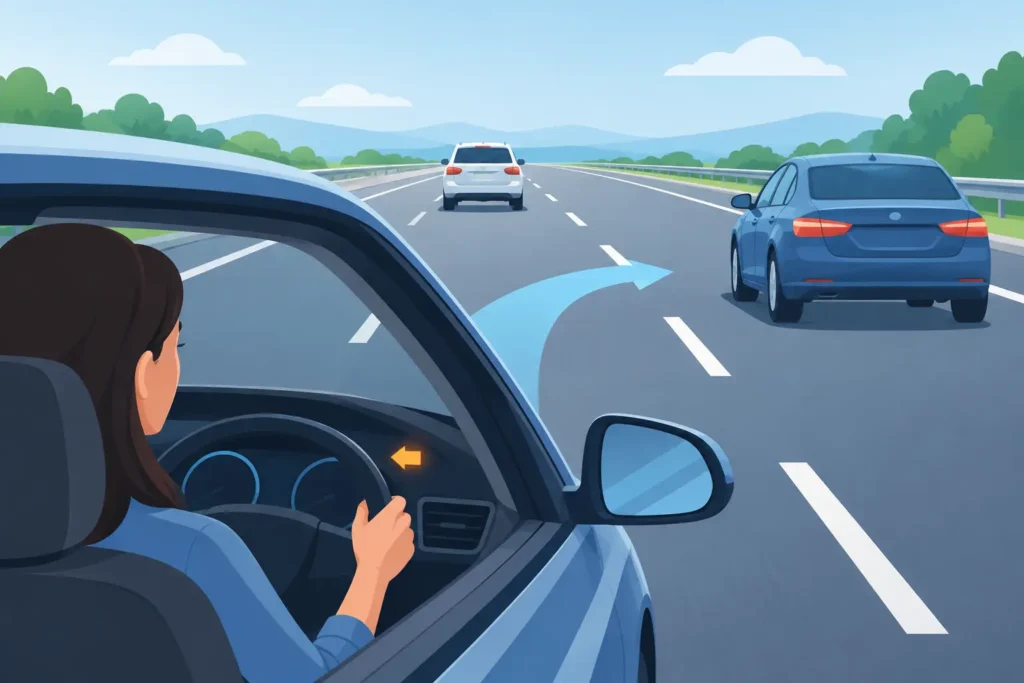
A safe lane change technique is more than turning on a signal and moving the steering wheel. On Montreal highways, crowded boulevards, and around construction zones, a lane change asks you to judge speed, space, and the actions of several other drivers at once. Learning a calm, repeatable process helps you protect yourself, your passengers, cyclists, and everyone sharing the road.
For new drivers, the goal is not to change lanes quickly. The goal is to change lanes only when there is enough time, enough space, and a clear reason to do it. That habit also makes a strong impression during a road test because it shows observation, planning, and control.
What Makes a Lane Change Safe?
A lane change is safe when you have checked the traffic around your vehicle, communicated your intention early, found a suitable gap, and moved over smoothly without forcing another road user to brake or swerve. Each part matters. A driver can have a large opening in the next lane but still create risk by failing to notice a vehicle in the blind spot.
The right decision also depends on conditions. A gap that feels comfortable on a dry, open road may not be enough during rain, snow, darkness, heavy traffic, or near an exit. In Quebec, winter conditions can reduce visibility and increase stopping distances quickly. When conditions are poor, leave more room and make fewer unnecessary lane changes.
The Safe Lane Change Technique: A Simple Sequence
Use the same order every time: plan, mirror, signal, blind-spot check, move, and recheck. With practice, these steps become smooth rather than rushed.
Plan Before You Need the Lane
Look far ahead. Are you approaching a turn, exit, parked vehicles, a bus stop, or a lane that ends? Planning early prevents the last-second lane changes that cause many close calls.
If you know you need to turn right soon, begin looking for a safe opportunity well before the intersection. Do not wait until you are beside the turn lane and then cut across traffic. Missing a turn is inconvenient, but forcing a lane change is dangerous. Continue safely and find another route when necessary.
Planning also means choosing the lane that best matches your speed and destination. On a multilane road, avoid weaving from lane to lane just to pass one vehicle. The small time saved is rarely worth the added risk.
Check Your Mirrors
Start with your inside rearview mirror to understand what is happening behind you. Then check the outside mirror on the side you intend to enter. Look for vehicles approaching quickly, motorcycles, bicycles, or drivers who may also be preparing to change lanes.
Mirrors provide useful information, but they do not show everything. Their job is to help you build a picture of traffic before you turn your head for the blind-spot check. Keep your glance brief. You still need to monitor the road in front of you.
Signal Early, Not at the Last Moment
Activate your turn signal before moving toward the other lane. Signaling gives nearby drivers time to understand your intention and adjust if needed. It is communication, not permission.
Do not assume another driver will make space because your signal is on. You are still responsible for entering only when the lane is clear. Likewise, do not start drifting over while signaling. Keep your vehicle centered in its lane until you have completed your checks and selected a safe gap.
Check the Blind Spot Every Time
The blind spot is the area beside and slightly behind your vehicle that may not appear in your mirrors. A quick shoulder check is essential before every lane change, including when you think the lane is empty.
Turn your head toward the lane you want to enter and look over your shoulder briefly. Do not stare. The purpose is to confirm that a car, motorcycle, cyclist, or other road user is not hidden beside your vehicle. Then return your eyes forward and begin moving only if the space remains clear.
For a left lane change, check over your left shoulder. For a right lane change, check over your right shoulder. This sounds basic, but it is one of the habits examiners and experienced instructors watch closely because missing it can lead to a serious conflict.
Move Smoothly Into the Gap
Once the lane is clear, steer gradually into it. Avoid sudden movements or sharp corrections. Maintain a speed close to the flow of traffic, without accelerating aggressively to squeeze into a small opening.
A safe gap gives both vehicles room to continue normally. If the car behind in the new lane would need to brake hard after you enter, the gap was not large enough. Wait for a better opening. Patience is a driving skill.
As your vehicle enters the lane, keep looking ahead. Do not fixate on the vehicle beside or behind you. Center your car in the lane, straighten the steering wheel, and turn off the signal once the maneuver is complete.
Recheck Your Space
After changing lanes, glance in your mirrors again. Confirm that you are centered, that you have not cut off another driver, and that traffic is still moving as expected. This final check helps you stay aware instead of treating the maneuver as finished the moment your tires cross the lane line.
Common Mistakes New Drivers Should Avoid
The most common mistake is changing lanes because you feel pressured by drivers behind you. A tailgating driver can make anyone nervous, but rushing does not improve the situation. Keep a safe speed, choose a clear gap, and let impatient drivers pass when it is safe.
Another frequent mistake is relying only on mirrors. Modern vehicles may have blind-spot monitoring systems, but those features are aids, not replacements for observation. A shoulder check remains necessary, especially when cyclists or motorcycles may be nearby.
New drivers also sometimes signal too late, drift across the line before checking, or look over their shoulder for too long. Practice the sequence until each observation is brief and purposeful. Your hands should remain steady, and your eyes should return to the road ahead quickly.
Finally, avoid changing lanes in places where visibility or space is limited. Intersections, crosswalks, curves, highway entrances and exits, areas with heavy pedestrian activity, and work zones require extra attention. It may be legal to change lanes in some of these areas, but legal does not always mean wise. If the situation is busy or uncertain, stay in your lane until conditions improve.
Lane Changes on Highways and City Streets
Highway lane changes require earlier planning because traffic moves faster. Check farther behind you, signal sooner, and expect vehicles in the next lane to close the gap faster than they appear to. Before merging or changing lanes near an exit, make sure you understand which lane you need well in advance.
On city streets, the risks are different. Watch for parked cars, opening doors, buses pulling away, cyclists, pedestrians near crosswalks, and vehicles turning from side streets. A right lane change deserves special care because a cyclist may be traveling alongside traffic near the curb.
In slow, congested traffic, do not assume a small opening is an invitation. Make eye contact only when possible, use your signal, and wait until you can enter without surprising anyone. Courtesy helps, but your decision must be based on a clear and safe space.
How to Practice Before Your Road Test
Start practicing on quieter roads where you can focus on the sequence without heavy pressure. Say the steps quietly to yourself: mirror, signal, shoulder check, move. This can help build the routine until it feels natural.
As your confidence grows, practice on roads with moderate traffic and different lane situations. Work on changing lanes to prepare for turns, passing safely when permitted, and returning to your lane with enough space. Ask your instructor to point out moments when waiting would have been the better choice. Good driving is often about recognizing when not to act.
During an SAAQ road test, do not perform a lane change simply to prove you can do one. Follow the examiner’s directions, observe carefully, and use the full process whenever a lane change is needed. A deliberate shoulder check, early signal, and smooth movement show that you are managing the vehicle responsibly.
Ecole Unity helps learners build these habits through structured practice that connects driving rules with real Montreal traffic situations. The more consistently you use the same safe process, the less stressful lane changes become.
The next time you need to move over, give yourself permission to wait for the right gap. A missed exit can be corrected. A rushed decision may not be.